

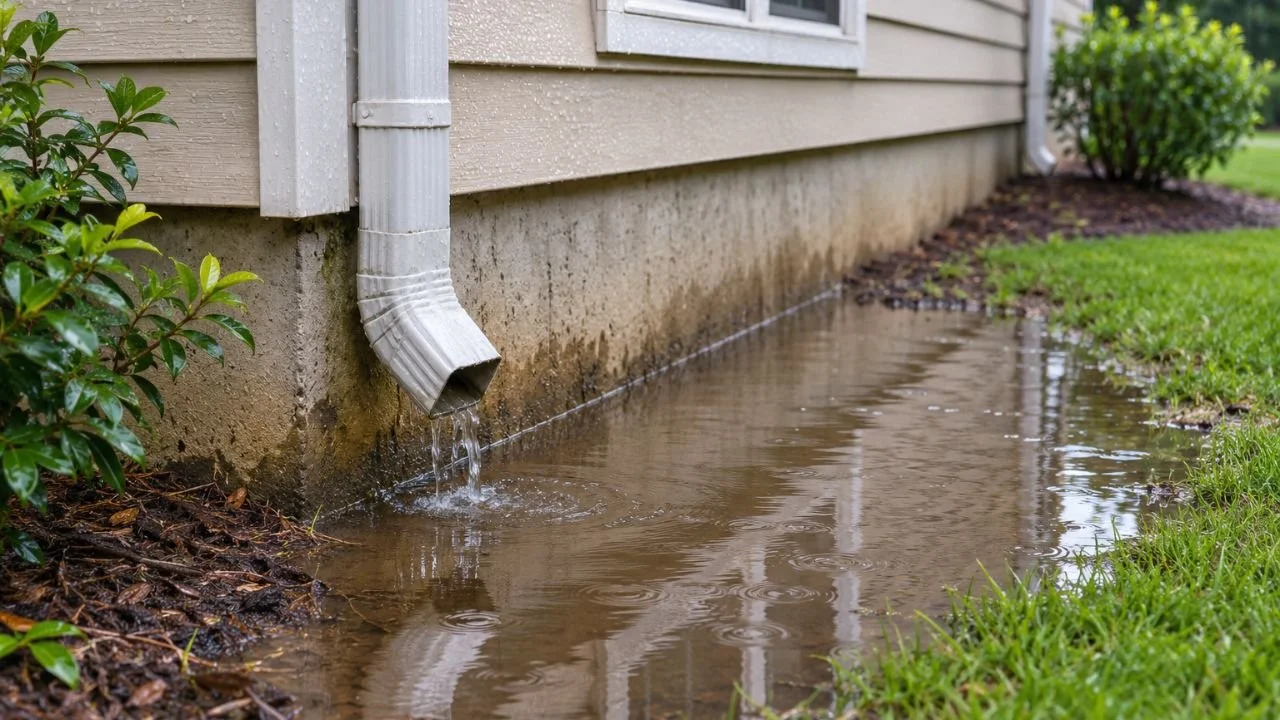
Water pooling around foundation walls usually means rainwater has nowhere to drain. Clogged gutters, short downspouts, and poor yard slopes are common causes. If the same puddles return after every storm, your home may have a drainage problem worth fixing.
In Atlanta, heavy rain can expose these problems fast. You might see water below a gutter corner or near your front steps. By the next morning, it may be gone. But that doesn't mean the cause has gone away. The first step is finding where the water comes from. Some problems need a simple gutter repair. Others call for changes to your yard or ground drains.
Why Is Water Pooling Around Your Foundation?
Your roof sends a lot of water toward the ground when it rains. Gutters collect that water and guide it through downspouts. The ground around your home should then carry it away. If one part fails, water can collect beside the house. Over time, wet soil may let moisture reach your crawl space or basement.
Look at where the puddle forms. Its location can tell you where to start.
| What you notice | Possible cause | What to check |
|---|---|---|
| Water falls over the roof edge | Clogged gutter | Leaves and blocked outlets |
| Puddle below a downspout | Short or poorly placed pipe | Where the pipe ends |
| Water sits along one wall | Poor yard slope | Direction of ground runoff |
| Water drips from gutter joints | Damaged or loose gutter | Leaks and sagging sections |
| Water collects near a yard drain | Blocked drainage pipe | Drain opening and outlet |
These signs point to likely causes, not a final diagnosis. More than one problem can affect the same spot.
5 Drainage Problems That Cause Water Pooling Around Foundation Walls
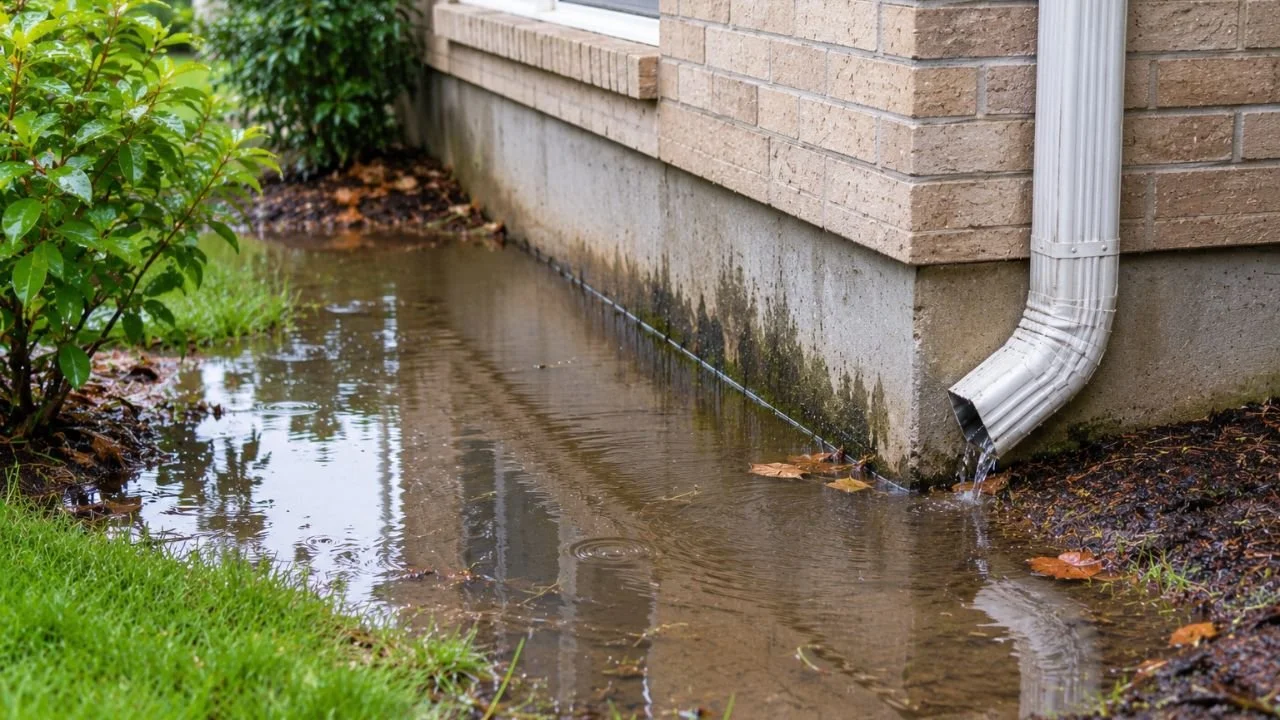
1. Clogged Gutters Are Overflowing
Gutters cannot carry rainwater if leaves and dirt block the flow. Water builds up until it spills over the edge. It then lands near the house instead of reaching the downspout. Atlanta has many tree-lined neighborhoods. Pine needles, leaves, and small twigs can collect in gutters throughout the year. A gutter may look clear from the ground while the outlet stays blocked.
Picture rain falling in a steady sheet from one roof corner. The soil below gets washed out, yet the downspout nearby barely drains. That often points to a clog or another flow problem.
Signs worth checking:
Water spills over the gutter edge during rain.
Leaves or small plants are visible in the gutter.
Dirt has washed away below the roofline.
Water stays in the gutter after the rain stops.
A professional gutter cleaning can clear trapped debris and check the flow. If your gutters clog often, ask whether gutter guards make sense for your home.
2. Downspouts Release Water Too Close to the House
A downspout can work well and still cause trouble. If it ends right next to your foundation, it sends roof water into one small area. You may notice a puddle below the pipe after each storm. Sometimes the soil looks sunken, or the mulch has washed away.
The U.S. Department of Energy's Building America guidance recommends that downspouts discharge at least five feet from the foundation onto ground that drains away. Other drainage systems may be needed where that is not possible.
Check these points:
Does the pipe end beside the wall?
Is the outlet crushed or blocked?
Does the water flow back toward the house?
Has a pipe section come loose?
An extension may help if the yard has a safe place for the water. If not, a drainage contractor may need to plan another route. Do not just move the puddle from one side of your house to another.
3. The Ground Slopes Toward Your Foundation
Even good gutters cannot fix a yard that sends rainwater toward the house. This is easy to miss. A lawn can look flat from the street but still slope inward. Soil may settle over time, leaving a shallow dip near the wall.
Some parts of Metro Atlanta also have dense clay-rich soil. Water can drain slowly through this type of ground, making a poor slope more troublesome. Experts recommend that the ground drop about six inches over the first ten feet from the house, where space allows. Look for soil that has sunk near the foundation. Check if rain flows from your lawn, driveway, or patio toward the same wall.
If the slope is wrong, ask a qualified drainage contractor about grading or another way to carry water away. Replacing gutters will not correct the slope of your yard.
4. Loose or Sagging Gutters Are Leaking
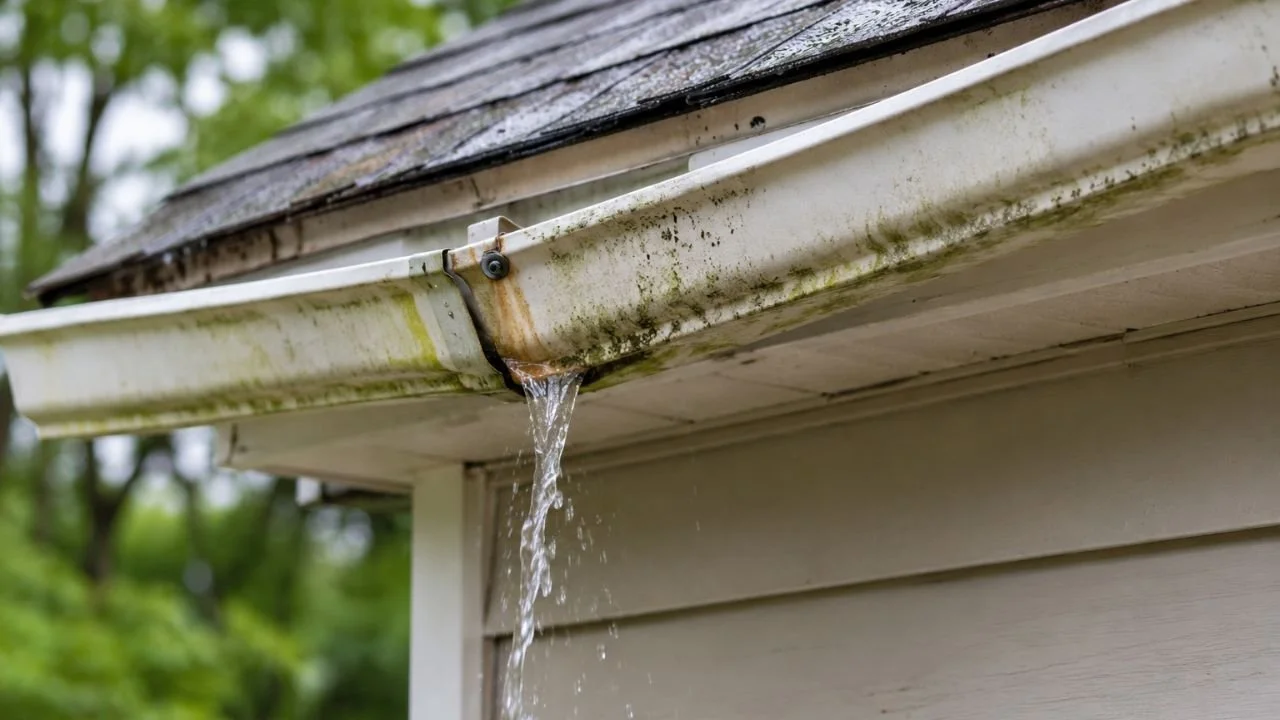
A gutter doesn't need a large hole to cause water problems. A loose joint or low section can send rain straight down the wall. You may spot a dark stain below a gutter seam. Or one part of the gutter may hang lower than the rest. Gutters need a slight slope toward the downspout. When a section sags, water can sit inside or spill where it shouldn't.
Common signs include:
Water dripping through gutter corners.
Gutters pulling away from the roof edge.
Loose brackets or fasteners.
Cracks, rust, or holes in gutter sections.
Not every damaged gutter needs replacing. A repair may be enough when the damage is limited. National Gutter Alliance's gutter repair services include securing loose gutters, fixing downspout sections, checking gutter slope, and inspecting leaking corners. A professional inspection can help you decide whether repair or replacement is the better choice.
5. Yard Drains or Buried Pipes Are Blocked
Some homes have drains near patios, driveways, or low spots in the yard. Others use buried pipes to carry water away from downspouts. These systems work only when water can pass through them. Leaves can cover a drain grate. Dirt or roots may also block a buried pipe. When water cannot move through, it can back up near the house.
A common clue is a puddle near a drain that stays full long after rain has stopped. Check for leaves on the grate and signs of water backing up. Also look at the pipe's outlet, if you can see it safely. Removing debris from a surface grate may help. Buried blockages often need a drainage professional. Never assume the pipe is clear just because its opening looks clean.
How to Find Where the Water Is Coming From
You don't need to guess which part has failed. Watch where water moves during the next rain, from a safe spot on the ground. Start with the roof edge. Is water flowing into the gutter or falling over it? Then look at the downspout and see where it releases the water. If the gutter works, watch how rain moves across the yard.
Use this quick check:
Note where the first puddle appears.
Look for water spilling from gutter seams.
Check where each downspout drains.
See whether yard runoff flows toward the wall.
Take a photo of the wet area for a service professional.
Don't climb a ladder during rain. A ground-level view is enough to gather useful clues.
How Long Does It Take for Water to Damage a Foundation?
There is no set number of days or weeks. The risk depends on how much water collects, how often the soil gets wet, and how your home was built. One puddle after a storm does not prove that your foundation is damaged. But water that returns to the same spot deserves attention.
Repeated wet soil can place pressure on foundation walls. Moisture may also enter a basement or crawl space through gaps or cracks. Watch for damp walls, musty smells, or water entering the house. New or widening cracks and bowing walls need a qualified foundation professional. The safer choice is to address repeated drainage problems before you see signs of damage inside.
When Should You Call a Professional Gutter Service?
If water spills from gutters or leaks through joints, start with a gutter professional. These are problems a gutter cleaning or repair service may be able to fix. If water runs across your lawn toward the house, you may need help with grading or yard drainage instead.
For Atlanta homeowners, National Gutter Alliance offers professional gutter cleaning, repair, installation, and replacement services. Our gutter repair service covers common issues such as loose sections, leaks, damaged downspouts, and gutter slope problems. An inspection can help determine whether a repair is enough.
If you're seeing water near your foundation after rain, contact National Gutter Alliance for a free gutter service quote. Share where the puddles form and any photos you have. That can help explain the problem before the visit.
