

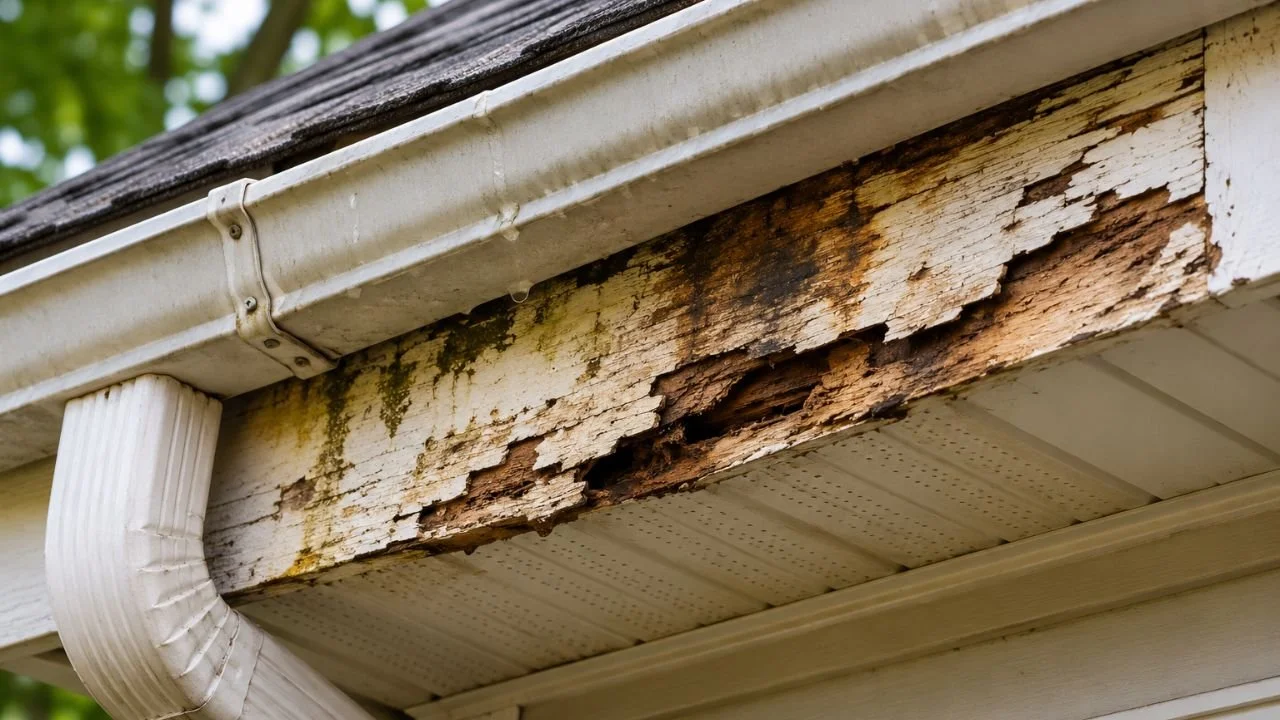
A rotted fascia board can come back to haunt you if the water problem was never fixed. You replace the bad wood, give it a fresh coat of paint, and think you're done. A few months later, the paint starts peeling again. Now you're wondering why you spent money fixing it in the first place.
Maybe you've spotted a dark patch near your roofline. Or a gutter has started coming loose again. Atlanta gets plenty of heavy rain, and even a small leak can cause trouble over time. At National Gutter Alliance, we help homeowners with gutter and roofing problems. Here are six things that might explain why the rot keeps coming back.
Why Does a Rotted Fascia Board Keep Coming Back?
That long board sitting behind your gutters is called the fascia. It runs along the edge of your roof and covers the ends of the roof framing. In many homes, the gutters are screwed right into it.
Wood doesn't rot overnight. It usually starts with water getting into places it shouldn't. Maybe the gutter leaks, or rain slips under the roof edge. If the wood stays wet, it slowly begins to soften. And when the wood gets soft, the gutter screws may not hold properly either. So, what's letting the water in?
1. Your Gutters Overflow When It Rains
Have you ever noticed water pouring over the side of your gutters during a storm? It's easy to ignore once the rain stops, especially if everything looks normal the next morning. But that water may have been running straight down the fascia. Atlanta gets heavy summer rain, and gutters can fill up quickly with leaves and pine needles. When water can't reach the downspout, it spills over the edge. If this happens often enough, the wood behind the gutter may start to rot.
A few things you might notice:
Water spilling over during heavy rain
Leaves stuck around the downspout
Dark streaks below the gutter
Water sitting in the gutter long after the rain stops
Sometimes, cleaning out the leaves fixes the problem. Other times, it doesn't. If the gutter is already clean, check whether water is flowing toward the downspout. A gutter that sits too flat can hold water instead of draining it. There might also be a blockage farther down the pipe. If water only spills over during really heavy storms, the gutter may not be large enough for that part of your roof. Before replacing the fascia again, have someone check why the water isn't draining properly.
2. Water Is Running Behind Your Gutters
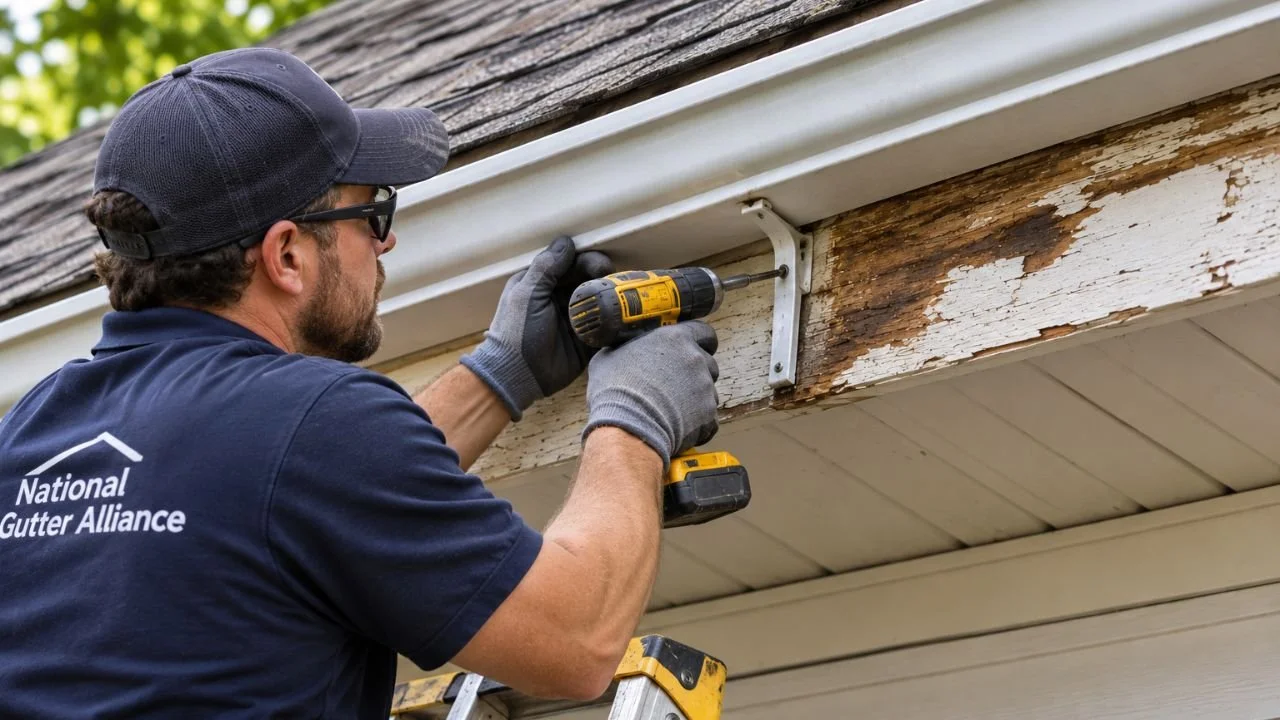
Not all gutter leaks are easy to spot. Some happen behind the gutter, where you can't see them from the driveway. The gutter may look straight and clean. But during rain, water slips through a gap near the roof edge or leaks from a joint. It then runs down the back of the gutter.
You may first notice paint bubbling along the top of the fascia. By then, the wood could have been getting wet for quite some time. At National Gutter Alliance, our gutter repair services include checking gutter slope, leaking joints, and loose parts. Sometimes, a gutter needs adjusting or securing. If the roof-edge flashing is causing the leak, that needs attention as well.
3. The Roof Edge Has a Leak
What if your gutters aren't the problem? Rainwater may be getting under the shingles or around the edge of the roof. A loose shingle, damaged flashing, or poorly fitted drip edge can let water reach the fascia. The drip edge is a thin metal strip along the roof. Its job is to help guide rainwater away from the wooden parts and into the gutter. When it isn't doing that job, the top of the fascia can get wet.
You might notice:
Peeling paint just below the shingles
Dark stains near the top of the board
Damp patches after a storm
Soft wood behind a gutter that looks fine
Roof-edge leaks can be hard to find from the ground. A roofing professional may need to check the area more closely.
4. Your Gutters Are Pulling Away From the House
Have you noticed a gap between your gutter and the fascia? Maybe one section hangs a little lower than the rest. Loose gutter screws could be the problem. But sometimes, the wood holding those screws has started to rot.
Think about trying to tighten a screw into soft wood. It might seem secure at first, but there's not much for it to grip. Add the weight of rainwater, and the gutter can start pulling away again. If the fascia is still firm, the gutter may only need new fasteners or better support. But if the wood is soft or crumbling, that section usually needs replacing before the gutter goes back up. Simply tightening the screws won't do much if the wood behind them is falling apart.
5. The New Wood Wasn't Fully Protected
A new fascia board can look great after installation. Fresh paint covers the surface, and everything looks neat from the ground. But small gaps can cause trouble later. The cut ends of the board, joints, and old screw holes are all places where water may get in. If bare wood is left exposed, it can absorb moisture whenever it rains.
You may notice a little paint bubbling near a joint. At first, it doesn't look like much. Then the paint cracks, and the wood underneath starts feeling soft. Proper priming, painting, and sealing can help protect sound wood. But once the wood has rotted, another coat of paint won't make it strong again.
6. The Last Repair Missed Some of the Damage
Sometimes, the rotten section you can see isn't the only part that's damaged. Let's say a contractor removes two feet of bad fascia. The new board goes in, the gutter is put back, and the job looks finished. But what if the wood next to it was already damp? Or water had reached the soffit underneath the roof overhang? That damage might not show up right away.
Before another repair, ask the contractor to check:
How far the soft wood extends
Whether the soffit has water damage
If the gutter fasteners have firm support
Whether nearby wood is still sound
If any roof framing needs attention
A small repair may be all you need. The important part is checking the surrounding area before closing everything up.
How Can You Tell Where the Water Is Coming From?
You can learn quite a bit by watching your gutters during rain. Stay on the ground and look at where the water goes. There's no need to climb a ladder during a storm. The location of the damage may give you a clue.
| What you notice | What could be wrong |
|---|---|
| Water spills over the gutter | Clog or drainage problem |
| Water runs behind the gutter | Loose gutter or flashing issue |
| Paint peels near the shingles | Water entering from the roof edge |
| Gutter hangs lower in one spot | Loose fasteners or weak fascia |
| Rot appears near a board joint | Exposed or poorly sealed wood |
These signs won't tell you everything. But they can help you explain what's happening when you call for repairs.
Should You Repair or Replace a Rotted Fascia Board?
It depends on how much damage there is. If the paint is peeling but the wood underneath is still firm, you may only need surface repairs once the leak is fixed. A small rotten section can sometimes be replaced without removing the entire board. But if the wood crumbles, feels soft, or can't hold gutter fasteners, replacement is usually the better choice.
Planning to get new gutters? Have the fascia checked first. Otherwise, you might end up paying to remove those new gutters just to replace the wood behind them. And don't assume the whole fascia needs replacing because one section is bad. A proper inspection can help you work out how much needs to go.
How Much Does Rotted Fascia Board Repair Cost?
Rotted fascia board repair cost typically ranges from $500 to $2,400 in the US. But the price for your Atlanta home may be different. It depends on how much wood is damaged, the material used, and how easy it is to reach.
A few things can affect the cost:
How much wood needs replacing
Whether the gutters need to be removed
Damage to the soffit or roof edge
The height of your home
The type of fascia material
Before agreeing to a quote, ask what's included. Will the contractor fix the leak too? Will the gutters be put back securely? And what if they find more rotten wood once the old board comes off? It's better to know what you're paying for than deal with another repair bill next year.
How Can You Prevent Fascia Rot in Atlanta?
After a heavy storm, take a quick look at your roofline. Are the gutters draining properly? Is water spilling over one corner? Does anything look loose? You don't need to inspect your roof every week. But if you have trees hanging over your house, leaves and pine needles can build up in the gutters faster than you might expect.
A few things can help protect your fascia:
Keep gutters and downspouts clear.
Fix leaking joints and loose sections.
Have damaged roof-edge flashing repaired.
Keep exposed wood properly painted and sealed.
Check for stains or peeling paint after heavy rain.
If one spot keeps looking wet, it's worth getting it checked before the wood starts to soften.
Need Gutter or Roofing Repairs in Atlanta, GA?
Noticed peeling paint, loose gutters, or a soft patch along your roofline? It's worth getting the area checked before the damage spreads.
At National Gutter Alliance, we offer gutter repair, installation, and roofing services for Atlanta homeowners. We also provide aluminum fascia replacement. Our team can assess your gutter system and explain what work may be needed. Contact National Gutter Alliance to request a quote. Before paying for another fascia repair, wouldn't you rather know what's causing the problem?
Rotted Fascia Board FAQs
Can you repair a rotted fascia board without replacing it?
Sometimes you can repair a rotted fascia board without replacing it. If the wood is still firm and only the paint is damaged, surface repairs may be enough. But soft or crumbling wood usually needs replacing. How much depends on the extent of the rot.
Can clogged gutters cause fascia boards to rot?
Yes. Leaves and dirt can block rainwater from flowing through the gutters. When water spills over and keeps soaking the fascia, the wood may eventually rot.
Can you install new gutters on rotten fascia?
Not if the wood is too weak to hold the fasteners. Gutters need a firm place to attach. Have the damaged fascia checked and replaced where needed before installing new gutters.
How long does a fascia board last?
A well-maintained wood fascia board can last for decades. Its lifespan depends on the material, weather, paint, and how well the roof drains. Constant moisture can shorten its life.
Can leaking gutters damage a new fascia board?
Yes. Even newly installed wood can develop rot if it stays wet. A leaking joint, poor gutter slope, or gap near the roof edge can expose the new fascia to water.
