

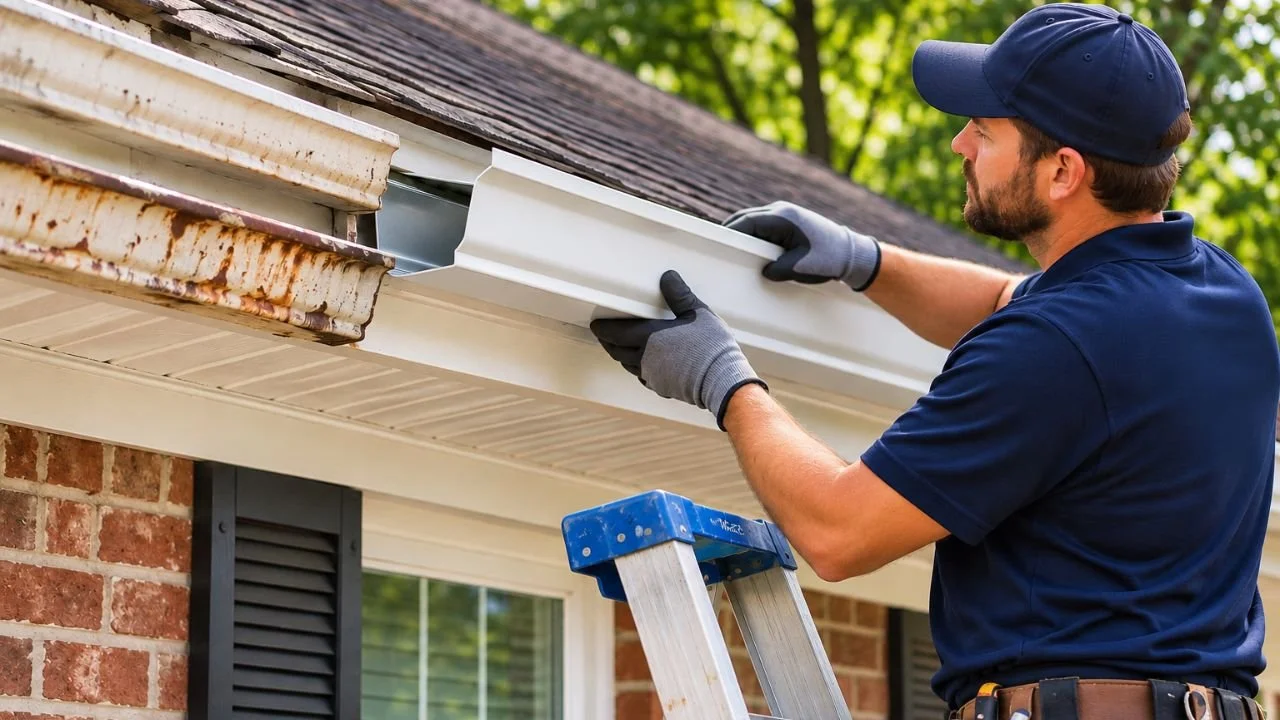
You should replace your gutters when they're badly damaged, or repairs don't seem to last anymore. A small leak can usually be fixed. But if you're paying to repair the same section every few months, new gutters may be worth the money.
Maybe you had a leak fixed last spring. Everything seemed fine until the next big storm. Now there's water running down the side of your house again. Do you call for another repair? Or is it time for new gutters? At National Gutter Alliance, we help Atlanta homeowners deal with these problems. Here's what you need to know before making that choice.
When to Replace Gutters Instead of Repairing Them
First, look at how bad the damage is. One loose bracket or a leaking joint isn't much of a reason to replace a whole gutter. Those are often simple repairs. It's different when the gutter has bent out of shape or keeps leaking in several places. The main thing is to find out why it failed. If the cause is still there, the same problem may come back after another repair.
| What you notice | Usually worth fixing | May need replacing |
|---|---|---|
| Leaking gutter | One bad joint | Leaks in several places |
| Sagging | Loose brackets | Bent gutter |
| Holes | One small hole | Holes along the gutter |
| Overflow | Leaves or blocked pipe | Gutter too small for roof |
| Water near house | Short downspout | Several gutters not draining |
You may only need one new section. The rest can stay if they're still in good shape.
5 Warning Signs Your Gutters May Need Replacing
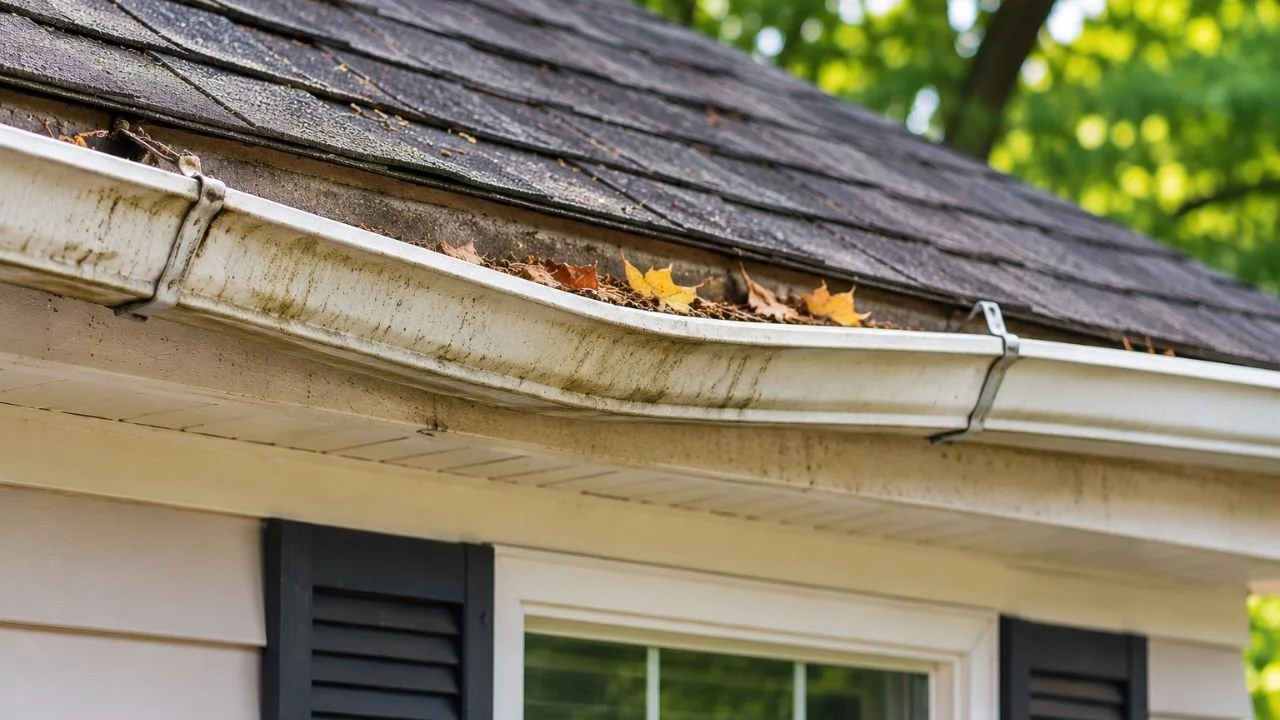
1. The Same Gutter Keeps Leaking
A drip from one joint isn't unusual. The seal may have worn out, and putting on a fresh one can stop the leak. But what if that joint has already been fixed? Maybe it held for a few months, then started leaking again. The problem could be the gutter itself.
Two sections may have pulled apart. The metal might have bent slightly, leaving a gap that sealant can't hold shut for long. You don't need to replace everything because of one bad joint. Have someone check whether that section can still be repaired. If several joints are failing, though, a new run may make more sense.
2. The Gutters Don't Sit Straight Anymore
Look up at the roofline from your yard. You should see a fairly straight gutter with a slight slope toward the downspout. If there's a big dip in the middle, something has changed. Leaves and pine needles are often part of the problem. They collect inside the gutter, get soaked during rain, and become heavy. That weight can pull the brackets loose.
If the brackets are the only problem, they can often be fixed. But sometimes the gutter has been hanging low for so long that it's bent. There's also the wood behind it to think about. That's the fascia board. If the wood is rotten, putting new brackets into it won't help much. The damaged wood needs to be repaired first.
3. Small Holes Keep Showing Up
You might spot a tiny hole near a corner. A patch may take care of it, especially if the metal around it is still solid. A few months later, you notice another hole. Then another one near the downspout. That's when it's worth looking at the whole section. Steel gutters can rust through as they get older. Aluminum doesn't rust the same way, but it can still develop holes or cracks. Old vinyl gutters may split, especially around the joints.
Watch for:
Rust holes along the bottom of steel gutters
Cracks that keep getting bigger
Joints pulling apart
Metal that's worn thin around old repairs
If the damage is in one short section, you may be able to replace just that part. But there's little point patching one hole after another if the rest of the gutter is wearing out too.
4. Water Pours Over the Edge, Even After Cleaning
You've cleared the leaves. The gutter looks clean. Then Atlanta gets one of those heavy afternoon storms, and water starts spilling over the front. It doesn't always mean the gutter is bad. Sometimes, the downspout is blocked further down. You can't see the clog from the roofline, but water can't get through.
The gutter might also be sitting at the wrong angle. Rainwater should move toward the downspout. If the middle has dropped, water can collect there instead. And some gutters are simply too small for the amount of water coming off the roof.
Before replacing them, check these things:
Does water sit in the gutter after rain?
Is the downspout clear?
Has part of the gutter dropped?
Does the overflow happen only during very heavy rain?
Cleaning may solve a clog. A gutter that's out of line may be adjusted. But if the gutter can't handle the water coming off your roof, you may need a larger size or a different layout.
5. You're Seeing Water Damage Below the Gutters
You don't always notice a gutter problem by looking at the gutter. Sometimes, it's the paint peeling near the roof. Or a patch of soil that keeps washing away beside the house. Maybe you've noticed a puddle near the foundation after rain. It dries up, so you forget about it. Then the next storm comes, and the puddle is back.
Take a look around the house once the rain stops. Check for:
Water stains on the siding
Soft wood behind the gutters
Soil washed away below the roof
Puddles near the foundation
Damp patches in the crawl space
A short downspout can cause some of these problems. So can poor drainage around the yard. It doesn't always mean you need new gutters. Still, water shouldn't keep running down the side of your house. Find out where it's coming from before the damage gets worse.
Do You Need to Replace Every Gutter in Your House?
No. If only one section is damaged, there's no reason to assume the others need replacing. Think about the gutter above your garage. Maybe it has a large crack, but the gutters along the rest of the house work fine. Replacing that one run could solve the problem. Now say the front gutter leaks, the back one sags, and you've found holes near two downspouts. Fixing each problem separately may cost more than replacing the worn sections.
Ask the contractor to show you what's damaged. You should be able to see why they're recommending new gutters instead of another repair.
How Long Do Gutters Last?
That depends on the material and how well they've been cared for.
| Gutter material | Typical lifespan |
|---|---|
| Vinyl | 10–20 years |
| Aluminum | 20–30 years |
| Steel | 20–50 years |
| Copper | 50 years or more |
These are only rough estimates. A 25-year-old aluminum gutter may still work fine. A newer gutter that's been poorly installed might already need work. So if your gutters are getting old, don't assume they need replacing. Look at how they're holding up.
Is Repairing Old Gutters Worth the Money?
It can be. If one bracket has come loose, fixing it is usually cheaper than buying a new gutter. But say you've already paid for two repairs this year. Now there's another leak, and one section is starting to sag. At some point, it makes sense to ask what a new section would cost. You don't have to guess. Ask for a price to repair the damage and another price to replace the affected gutter. The cost will depend on how much gutter you need, the material, and how easy it is to reach. Rotten fascia boards can add to the work.
At National Gutter Alliance, we offer gutter repair services for Atlanta-area homeowners. Having someone look at the damage can help you decide whether to repair what you have or replace it.
Can Bad Installation Make Gutters Fail Early?
Yes. A gutter doesn't have to be old to cause problems. If it was installed too flat, water may sit inside instead of flowing out. If the brackets weren't secured well, the gutter may start pulling away. This is one reason DIY gutter installation can go wrong. The gutter may look fine from the ground, but the slope isn't quite right. Professional gutter installation is worth considering, especially on taller homes. Getting the slope, brackets, and downspouts right matters just as much as choosing the gutter itself.
Get Your Gutters Checked in Atlanta, GA
If you've been dealing with the same gutter problem for months, you don't have to keep guessing what's wrong. At National Gutter Alliance, we help Atlanta homeowners with gutter cleaning, repairs, and installation. Whether you need a small leak fixed or want to know if your old gutters are worth keeping, we can help you look at your options. Contact National Gutter Alliance to discuss your gutter problem and request a quote.
One repair may be all you need. But if you've paid to fix the same gutter more than once, isn't it worth finding out why the problem keeps coming back?
Common Questions About Gutter Replacement
Can you replace one section of gutter?
Yes. If the rest of your gutters are in good shape, you may only need to replace the damaged run. The new section needs to fit properly with the existing system.
Should I replace gutters that are 20 years old?
Not just because they're 20 years old. If they're still straight, don't leak, and drain well, they may have more life left.
Can sagging gutters be fixed?
Often, yes. Loose brackets can be repaired or replaced. But if the gutter is badly bent or the wood behind it is rotten, more work may be needed.
Why do my gutters overflow when they're clean?
The downspout could be blocked, the gutter may have the wrong slope, or it may be too small. It's best to find the cause before buying new gutters.
Is it better to repair or replace old gutters?
If the damage is small, repair is usually worth trying. If you're fixing leaks and loose sections over and over, compare the repair costs with the price of new gutters.
