

How to Clean Gutters With Gutter Guards: 7 Ways to Avoid Costly Damage
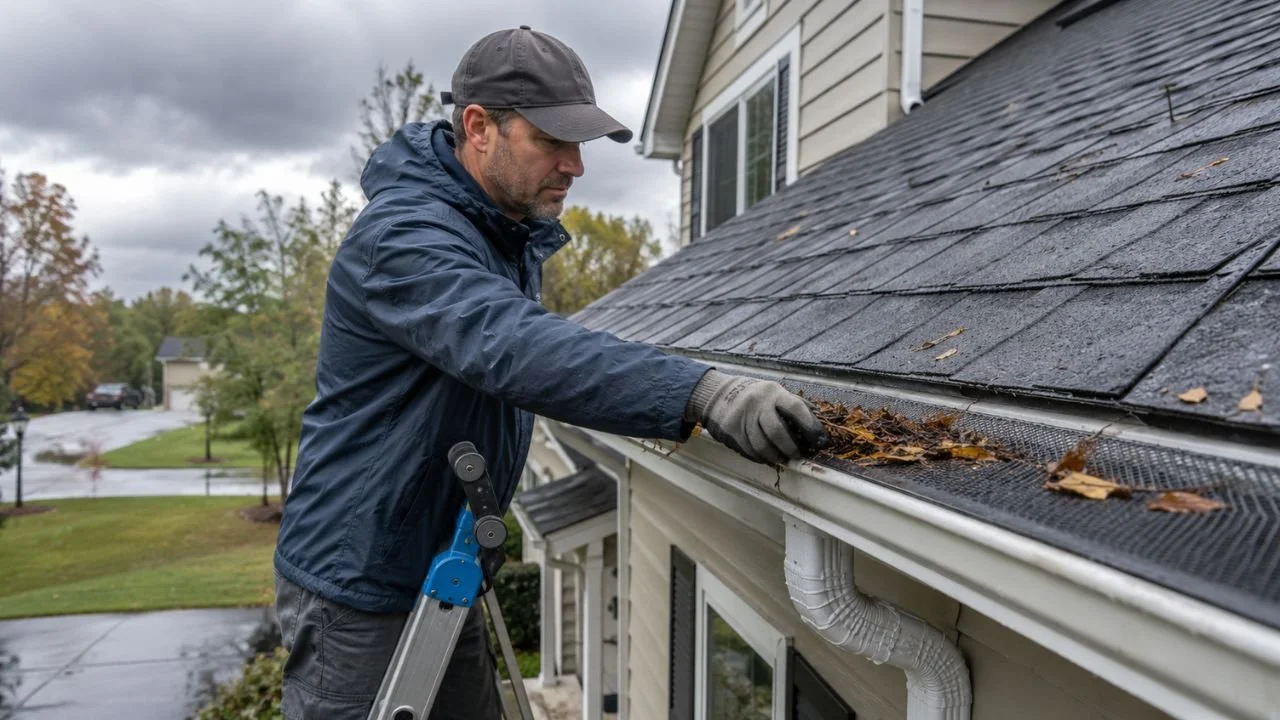
Water does not wait for you to notice a problem. It finds weak points fast. Gutter guards only reduce risk; they do not remove it.
Most homeowners see it only after a heavy rain. One corner overflows. A faint stain shows up under the roofline. The damage did not start there; it only showed itself there. Gutter guards slow debris, but they do not replace awareness. Especially across U.S. climates where water pressure changes from sudden Florida storms to slow Northeast leaf buildup.
When flow is even slightly blocked, water does not stop. It shifts direction. That shift is what quietly leads to fascia wear, siding stains, and foundation stress. This is why modern water management goes beyond gutters alone. We at National Gutter Alliance treat gutters, guards, and structural protection as a single, integrated system designed to control water under pressure.
Because water never cares how new the setup looks. It only follows gravity.
How to Clean Gutters With Gutter Guards Without Missing Hidden Failure Points
The biggest misunderstanding about gutter guards is simple. They do not block cleaning needs. They change where problems appear. Instead of leaves inside gutters, buildup forms on top. Instead of obvious clogs, you get slow drainage. Instead of full blockages, you get partial resistance that shows only during storms.
That is what makes maintenance tricky. The system looks fine until it is under pressure. So the real goal is not cleaning for appearance. It is identifying resistance before it turns into overflow damage. That is where most expensive repairs actually begin. Not failure, but delay.
Why Gutter Performance Varies So Much Across the United States
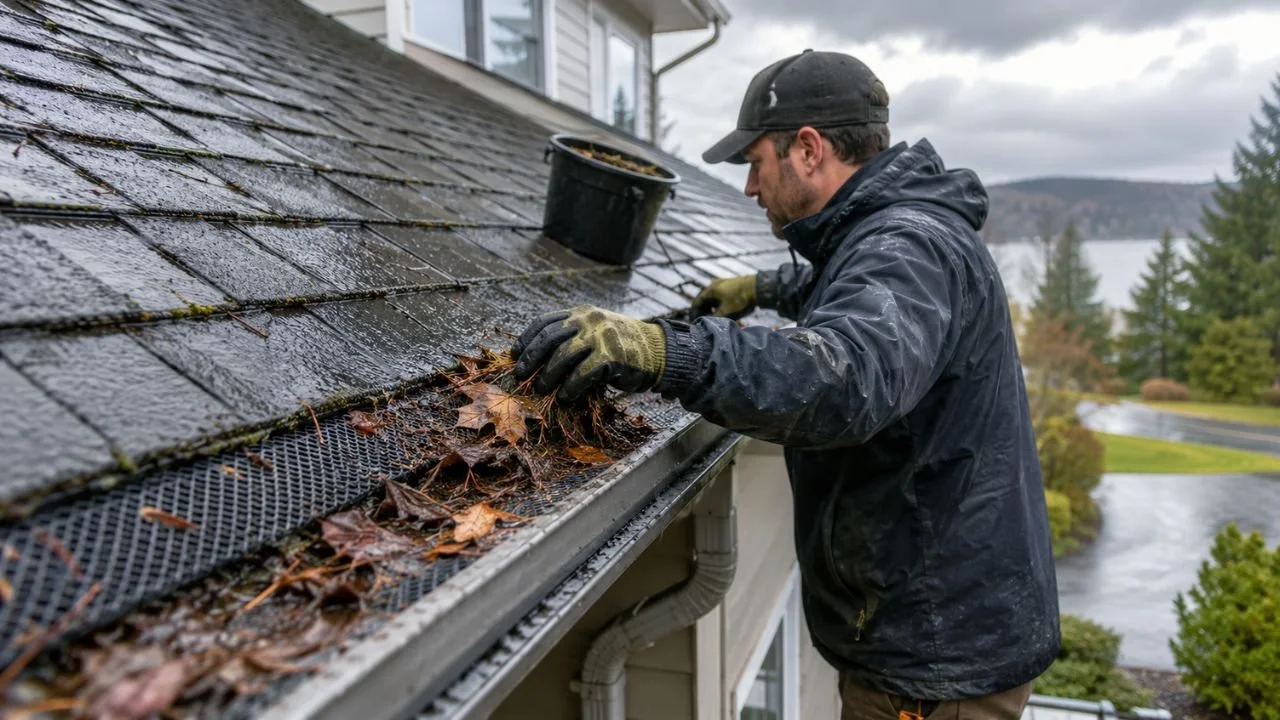
Water does not behave the same everywhere, and that is the core issue most homeowners miss.
In the Southeast, storms arrive fast and heavy. Gutters have seconds, not minutes, to move water. In the Midwest, freeze and thaw cycles slowly loosen debris inside downspouts. In the Northeast, leaf fall creates layered blockages over time. In windy western regions, dry debris collects quietly until rain activates it all at once.
So when someone asks how to clean gutters with gutter guards, the real question underneath is often this:
“Is my system built for my climate, or just installed on my house?”
That is where professional water management becomes important. Systems designed by specialists like National Gutter Alliance focus on engineered flow behavior, not just installation. Because every region puts a different kind of stress on the same structure, and water always exposes weak points first.
7 Ways to Maintain Gutter Guards Before Damage Becomes Expensive
These are not basic cleaning steps. They are decision checkpoints that show whether your system is still functioning or quietly failing.
1. Observe Water Behavior During Rain, Not After
Most homeowners check gutters when it is dry. That is the wrong moment.
The real information comes during rainfall. If water overflows at one section, flow is uneven. If it hesitates before entering downspouts, resistance is building. If everything looks fine but overflow still happens during storms, the issue is usually hidden under the guard or deeper in the system.
A key question here is simple: Is this overflow random, or repeatable in the same spot? Repeat patterns always signal system stress.
2. Clear Surface Build-Up Before It Compresses
Even with gutter guards, debris collects on top. Leaves, dust, and roof grit form a layer that slowly turns dense when wet. That layer does not need to fully block water to cause problems. It only needs to slow entry. During heavy rain, that delay overflows.
Light removal is enough. Pressure is not needed. Force is where damage begins, especially around fitted guard edges. Consistency matters more than intensity here.
3. Check Downspouts for Hidden Flow Restriction
A large percentage of gutter failures are not visible at the top. They are inside downspouts. Water may appear to drain normally until a storm pushes volume higher. Then it backs up suddenly.
Warning signs include:
Overflow in a single gutter section
Gurgling after rainfall
Slow drainage after storms
Water pooling near foundation edges
This is often where homeowners realize they need a gutter guard cleaning service, especially when blockages are not accessible from above.
4. Watch for Guard Shifts After Strong Weather
Gutter guards do not need to fall off to cause problems. Slight movement is enough. A small gap changes how water enters the system. It also creates entry points for debris. Over time, that gap becomes a buildup zone that grows faster after every storm.
After high winds or heavy rain, a quick visual scan from ground level can reveal early movement that would otherwise go unnoticed.
5. Pay Attention to Roof Valleys That Funnel Water

Roof valleys are high-pressure zones. They collect and direct more water and debris than flat roof sections. That means even a perfectly clean gutter can fail if a valley above it concentrates too much flow in one area.
If one section of a house consistently shows overflow or staining, it is often not a gutter problem. It is a roof flow concentration problem. This is one of the most common misdiagnosed issues in residential water systems.
6. Understand the Timeline of Gutter Failure
Gutter problems rarely happen instantly. They build in stages.
Typical progression looks like this:
Month 1: Surface debris begins collecting
Month 3: Slow drainage starts in heavy rain
Month 6: Fascia absorbs moisture at weak points
Month 12: Visible structural or siding damage appears
This timeline is important because most homeowners only react at the final stage. By then, maintenance is no longer enough. It has already been repaired.
7. Know When the System Needs Full Water Management Review
There is a point where cleaning is no longer the right solution.
If overflow repeats after cleaning, if fascia discoloration appears, or if multiple downspouts show inconsistent flow, the issue is no longer surface-level. This is where a full system evaluation becomes necessary.
Our professionals at National Gutter Alliance approach every project as a complete water management system, not a collection of separate parts. We combine seamless gutter installation, gutter guard systems, and structural solutions to help direct water safely away from your home, even during heavy rainfall. If water has already begun affecting roof edges, services like aluminum fascia replacement help restore structural protection and reduce the risk of further damage.
At this stage, the question changes. It is no longer “how do I clean this?” It becomes “why is water not moving the way it should, even after maintenance?” That is the point where long-term damage is either prevented or locked in.
Why Gutter Guards Still Require Strategic Maintenance Thinking
Gutter guards are often misunderstood as a permanent solution. In reality, they are a flow-control layer inside a larger water system. They reduce cleaning frequency, but they do not remove physics. Wind still carries debris. Roofs still shed material. Rain intensity still varies across seasons and regions.
Across the U.S., weather is becoming more unpredictable, which increases system stress even on newer installations. That is why many homeowners schedule a gutter guard cleaning service as part of their seasonal maintenance, especially after severe storms or heavy leaf fall.
That is why modern gutter systems are treated less like accessories and more like structural protection systems. When they are designed correctly and maintained regularly, they do more than move water. They protect foundations, reduce siding damage, and help stabilize long-term maintenance costs.
The difference is not visible in dry weather. It only shows during the next heavy storm.
