

How to Measure Gutter Size: 6 Expensive Mistakes Homeowners Make
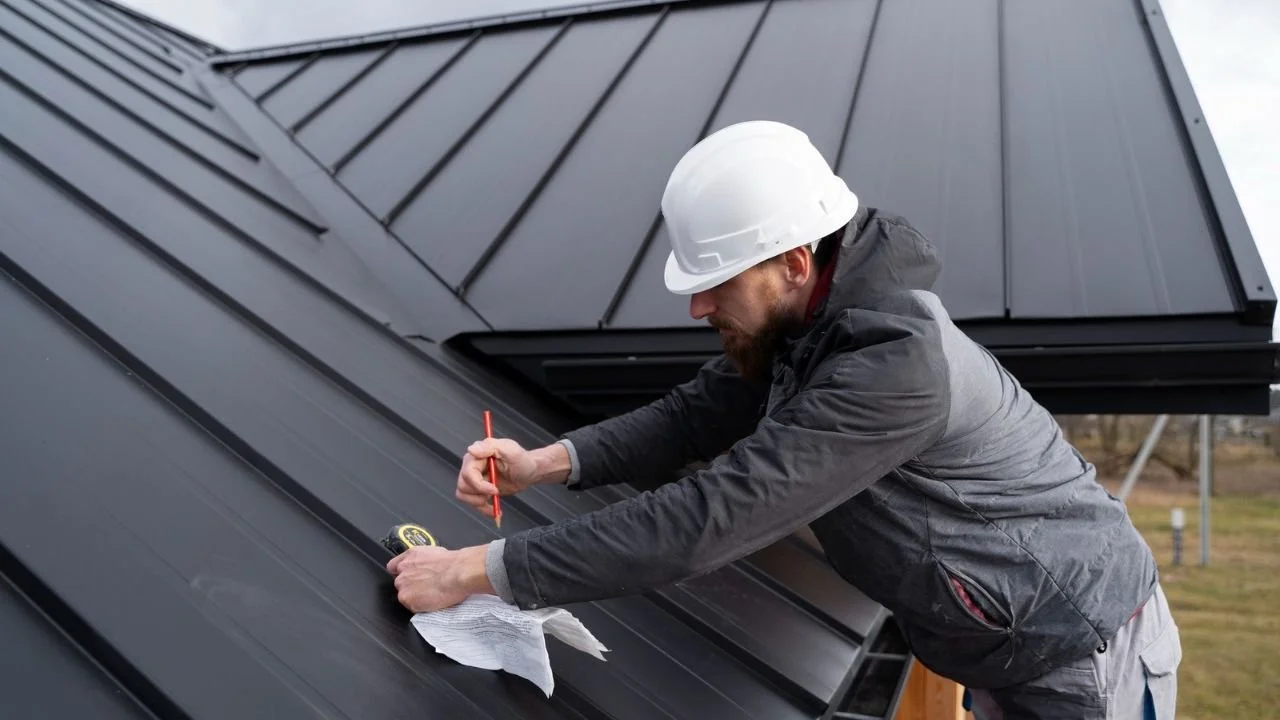
Most homeowners can learn how to measure gutter size, but very few get it right enough to avoid real drainage problems later. That’s usually the gap between a DIY attempt and a system that actually survives heavy rain.
On paper, gutter sizing looks simple. Measure the roof, pick a size, and install it. In real conditions, it rarely works that cleanly.
That’s why most experienced installers end up saying the same thing in practice: measuring is only the starting point. The real accuracy comes from professional assessment and installation.
That difference is what prevents costly water damage later.
Why Gutter Sizing Mistakes Happen More Than Expected
Gutters don’t fail because people choose the wrong material. They fail because water behaves differently than expected once it hits the roof edge.
A slight change in roof pitch, a short burst of heavy rain, or even an undersized downspout can completely change how the system performs.
So while DIY guides explain how to measure gutter size, they rarely show how quickly those numbers stop working in real storms. They also rarely explain how to measure gutter downspout size, which is often where real system failure begins.
That’s where professional judgment becomes important.
Mistake 1: Measuring Only Roof Edges Instead of the Real Water Flow
Most homeowners start by measuring the perimeter of the roof. That gives length, not performance.
What actually matters is how much water the roof collects during rain, which depends on:
Roof surface area
Roof slope
Rainfall intensity in the region
Two homes with identical roof sizes can need completely different gutter systems. This is where professionals don’t rely on guesswork. They calculate the water load before choosing anything else.
Mistake 2: Assuming One Gutter Size Fits All Homes
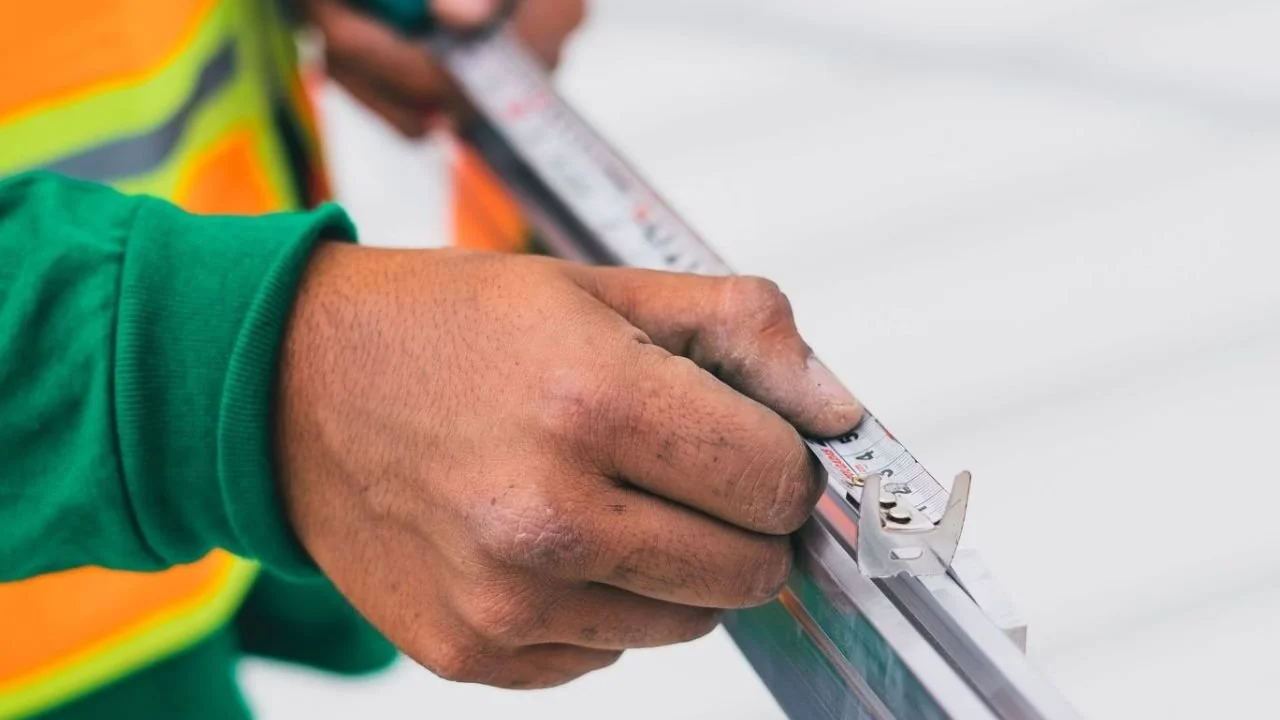
A common assumption is that all residential homes can use standard gutters.
In reality:
5-inch gutters work for lighter runoff
6-inch gutters are needed for higher water volume or steep roofs
The issue is not just size. Its capacity under pressure. Many DIY installations look fine until the first heavy storm exposes overflow points that weren’t obvious during dry conditions.
Mistake 3: Ignoring Roof Pitch and Water Speed
Roof pitch changes everything. A steep roof pushes water faster toward the edge, increasing pressure on gutters and downspouts.
This leads to:
Overflow at corners
Splash-back near walls
Uneven drainage flow
Most homeowners skip this step because it feels technical, but professionals treat it as a core part of sizing. In real installations, pitch often decides whether a system needs upgrades, even if the roof footprint is small.
Mistake 4: Undersizing Downspouts Without Realizing It
Even a perfectly sized gutter will fail if the downspout can’t handle the flow.
Typical setups:
2x3 downspouts for light to moderate flow
3x4 downspouts for heavy rain or larger roofs
When downspouts are too small, water backs up into the gutter system. That’s why understanding how to measure gutter downspout size is just as important as gutter sizing itself.
Professionals usually size gutters and downspouts together, not separately. That coordination is what prevents system imbalance.
Mistake 5: Ignoring Regional Rainfall Differences
Rainfall is not uniform across the US. Some regions experience:
Short, intense rain bursts
Long-duration rainfall
Seasonal storm spikes
A system that works in one region may fail in another. This is one of the biggest reasons DIY measurements often don’t translate into real-world success. Proper gutter sizing is never final until local rainfall and weather conditions are fully considered by professionals.
Mistake 6: Treating Gutter Measurement as the Final Decision
This is where most homeowners reach a turning point. Because after measuring, the questions usually start:
Is this size actually enough?
Did I calculate the roof area correctly?
What if heavy rain exceeds this setup?
Should I upgrade downspouts just in case?
At this stage, measurement stops being a simple task and becomes a risky decision. That’s exactly where professional input becomes valuable.
Instead of guessing, trained installers evaluate the full system and adjust based on real-world behavior, not assumptions.
That’s why many homeowners prefer professional gutter installation through services like National Gutter Alliance rather than finalizing sizing on their own.
Why Professionals Usually Get It Right the First Time

In field installations, sizing is not treated as a math exercise. It’s treated as a water control system.
Professionals look at:
How water moves across different roof sections
Where pressure builds during heavy rain
How quickly downspouts release water
Where overflow risk is highest
This kind of evaluation is difficult to replicate with DIY measurement alone. It’s not about complexity. It’s about experience with failure patterns. That experience is what reduces costly rework later.
DIY vs Professional Approach (Real-World Difference)
DIY approach usually looks like:
Measure roof edges
Pick a standard gutter size
Assume downspouts are fine
Install and hope it holds
A professional approach looks like:
Measure roof area and slope
Calculate water flow behavior
Match gutter and downspout capacity
Design drainage flow for peak storms
The difference only shows during heavy rainfall when systems either perform or fail.
When homeowners Realize It’s Better to Call Experts
Most people don’t switch immediately. They switch after small warning signs like:
Overflow during moderate rain
Water pooling near the foundation
Repeated clogging or splash-back
Uncertainty about whether sizing is correct
That’s usually the moment when accuracy becomes more valuable than DIY effort.
Professionals not only measure correctly, but also install with long-term performance in mind.
Through the National Gutter Alliance, homeowners can access trained installation services designed to ensure correct sizing and system balance from the start.
Our network helps connect homeowners with vetted service providers, reducing the risk of inconsistent installation quality. For those interested in how this expertise is developed,our training course highlights structured training that focuses on real installation accuracy, not just theory.
Why Most Gutter Sizing Mistakes Happen at the Final Step
Measuring gutter size often feels straightforward at the beginning, but that confidence usually fades when real-world conditions start affecting the result. What looks correct on paper can easily fail once roof pitch, rainfall intensity, and drainage flow come into play.
In most cases, homeowners don’t lose accuracy in the early steps. They lose it at the final decision point, where multiple small variables have to be judged together. That’s where experience matters more than estimation.
That’s why many homeowners eventually step back from DIY and rely on professionals who handle these final adjustments every day. A small sizing error might not look serious at first, but it can lead to overflow, water pooling, and costly structural issues over time.
The real issue isn’t just getting the measurement right. It’s whether this kind of decision should ever be finalized without expert guidance.
