

Copper Gutters: 6 Reasons They’re Worth It for Atlanta Homes
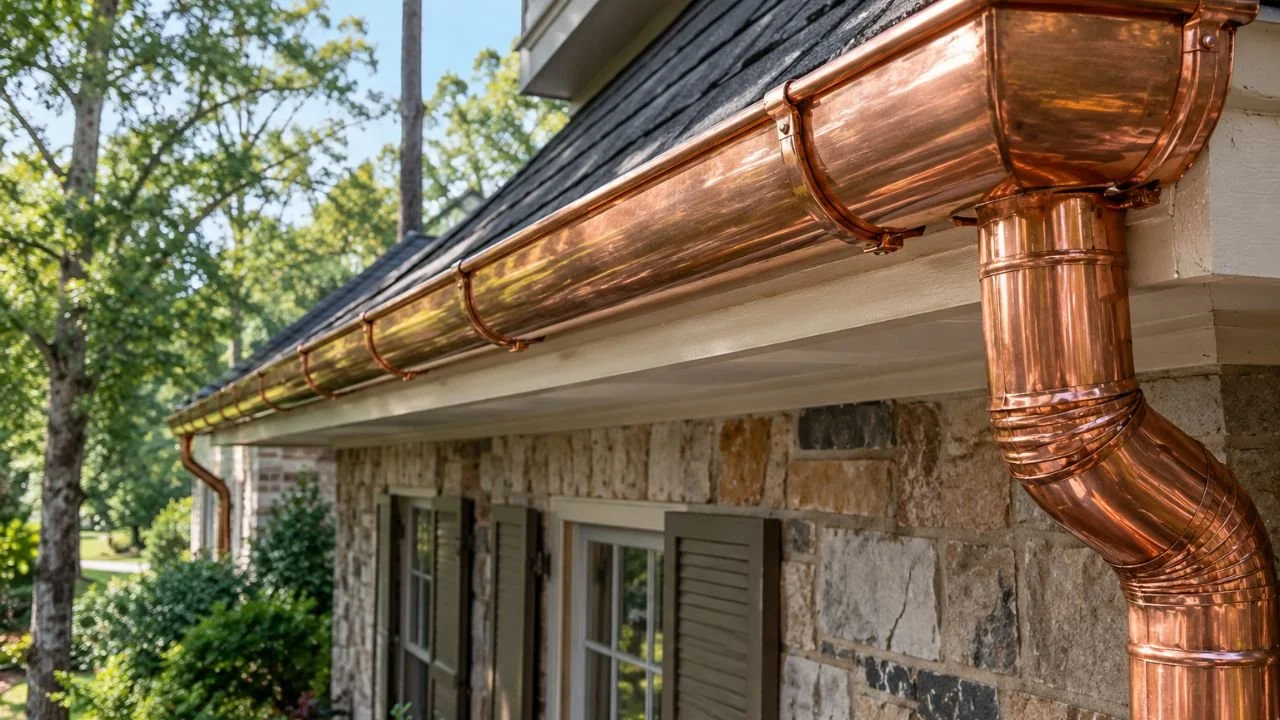
Copper gutters can be worth the extra cost for an Atlanta home. They make the most sense if you plan to stay long-term and want a gutter system built to last. They can last 50 years or more; they do not rust like steel, and their look changes as the copper ages. The catch? You will pay quite a bit more upfront. That is really where the decision starts.
If you plan to sell your home in a few years, good aluminum gutters may make more sense. But if this is the house you plan to keep, copper starts to look different. You are paying more now for a system you may not need to replace for decades.
Copper Gutters at a Glance
| Question | Quick answer |
|---|---|
| How long can they last? | Often 50+ years |
| Do they rust? | No |
| Do they change color? | Yes, copper develops a natural patina |
| Are they expensive? | Yes, much more than aluminum |
| Do they still need cleaning? | Yes |
| Are they easy to install? | No, professional installation is usually best |
Those are the basics. But they do not tell you whether copper makes sense on your house. For that, think about how long you plan to own the home. Then consider the look you want and how much you are willing to spend.
How Much Do Copper Gutters Cost?
Let's get the biggest drawback out of the way first. Copper gutters are expensive. Current national estimates vary, but Angi puts professionally installed copper at about $20 to $40 per linear foot. Aluminum runs around $4 to $14 per linear foot in its current comparison. Your actual Atlanta quote can be different because every roof is different.
A simple one-story home with a straight roofline is one job. A tall house with lots of corners, valleys, and downspouts is another. The amount of material, home height, roof design, labor, and any fascia work can all change the final bill. So don't choose copper from a per-foot number alone. First ask whether the benefits below matter enough to you.
1. Copper Gutters Can Stay on Your Home for Decades
This is the strongest case for spending more. Copper gutters commonly last 50 years or longer when installed and maintained well. Some estimates put their service life as high as 100 years. Aluminum typically falls closer to 20 to 30 years. That difference matters more if you plan to stay put.
Say you are improving a home you expect to own for decades. Replacing a cheaper system once or twice during that time is something you need to consider. Copper costs more on day one, but its long service life changes the math. Of course, 50 years does not mean 50 years of ignoring it. Leaves, pine needles, twigs, and roof debris can still cause clogs. Copper lasts a long time, but it still needs normal gutter care.
2. Copper Does Not Rust Like Steel
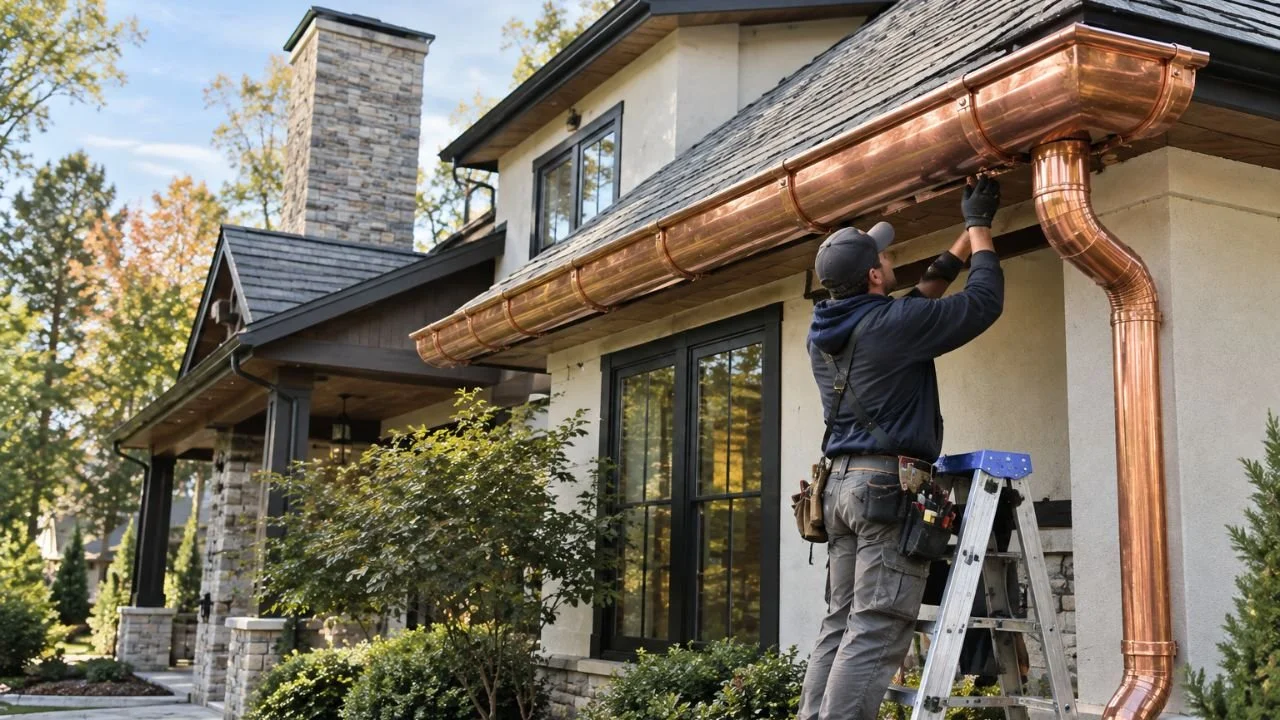
Atlanta gutters spend plenty of time dealing with rain, damp air, leaves, and roof runoff. Copper has one useful trait here. It does not rust the way ordinary steel can. Instead, the exposed surface slowly reacts with the air and moisture. That process changes the color and forms the patina copper is known for.
But don't confuse rust resistance with a clog-proof gutter. A copper system full of wet leaves can still overflow. Poorly placed downspouts can still cause drainage trouble. And the wrong gutter size or pitch will not suddenly work better because you paid for copper.
This is why the system matters just as much as the metal. At National Gutter Alliance, our installers assess the roof pitch, gutter size, local climate, and tree coverage before recommending a setup.
3. The Look Gets Better With Age, If You Like Patina
New copper is hard to miss. It has that bright reddish-brown shine that looks a little like a new penny. It will not stay that way. Over time, the metal darkens and can eventually develop blue-green tones. How quickly that happens depends on local conditions, including moisture and humidity. There is no reliable date you can circle on the calendar and say, “My gutters will be green by then.”
Some homeowners love that change, while others don't. This is worth thinking about before you spend the money. Look at photos of aged copper, not just fresh installations. If you only like the bright new-copper look, the natural aging process may not be for you. On the right home, though, aged copper can become part of the architecture rather than something that fades into the roofline.
4. Copper Gutters vs Aluminum Comes Down to How You Use Your Money
This is the decision most homeowners eventually reach. Copper gutters vs aluminum is not really a question of one material being good and the other bad. Aluminum is popular for a reason. It costs much less, does not rust, is light, and comes in many finishes. Copper asks you to spend much more in exchange for a longer service life and a very different look.
| Copper may suit you if... | Aluminum may suit you if... |
|---|---|
| You plan to own the home long term | You may move within a few years |
| You want gutters to stand out | You want gutters to blend in |
| You like natural patina | You want a specific painted color |
| Long life matters most | Lower upfront cost matters most |
| You are investing in a premium exterior | You want a practical everyday system |
If aluminum does everything your home needs, there is no rule saying you should upgrade. Copper starts making sense when you actually value what the extra money buys.
5. Copper Can Suit Certain Atlanta Homes Especially Well
Here's where I would stop looking at product charts and look at the house. Picture a traditional brick home with stone details and a visible roofline. Copper can become part of that look. Put the same bright metal on a house where every exterior detail is meant to disappear, and you may wonder why you paid extra for it.
Architecture matters. Half-round copper gutters are often chosen when the gutter itself is meant to be seen. The material can work well with brick, stone, wood, and other natural finishes. But appearance should never come before drainage. If the roof needs a different size, more downspouts, or another setup to move water well, solve that first. Pretty gutters that overflow during a hard rain are still bad.
6. Good Installation Matters More When the Material Costs This Much
Copper is not where you want to learn gutter installation through trial and error. It is heavier than many common gutter materials and requires specialized installation skills and tools. Copper systems may also use soldered joints, and care must be taken around incompatible metals.
Then all the normal details make a gutter work. Pitch has to be right. Hangers need proper spacing. Downspouts need to handle the runoff. Water needs somewhere safe to go once it reaches the ground. A mistake with cheap gutter material is annoying. A mistake with copper is expensive.
If you are considering a premium system in Atlanta, National Gutter Alliance's gutter installation service offers an on-site assessment before recommending a setup. Our installations are fully insured and come with a one-year service guarantee. That visit is also a good time to ask a question many sales pages skip: Does this house actually need copper?
When Copper Gutters May Not Be Worth It
Copper is a premium option, not an automatic upgrade for every home. Sometimes the smarter choice is to keep the money in your pocket.
You may want to stick with aluminum or another material if:
Your main goal is keeping installation costs low.
You expect to sell the home soon.
You dislike the green or brown patina.
You want gutters to match a painted trim color.
The home's style does not suit visible copper.
A quality aluminum system already meets your drainage needs.
There is nothing wrong with choosing the less expensive option when it does the job well.
Do Copper Gutters Make Sense for Your Atlanta Home?
Start with how long you plan to own the house. If you are thinking five years ahead, copper can be hard to justify on cost alone. If you are thinking 20 or 30 years ahead, its 50-plus-year potential lifespan becomes far more interesting.
Then look at the house itself. Does visible copper suit the brick, stone, siding, roof, and trim? Are you comfortable watching that shiny finish slowly change? Finally, look at the drainage system you actually need. Roof pitch, gutter size, trees, downspout placement, and the condition of your fascia can matter as much as the material.
You can have National Gutter Alliance assess your Atlanta property and recommend a setup based on the home rather than guessing from an online price chart. If copper fits, you will know why you are paying more. If it doesn't, that is useful to know before the first section of gutter goes up.
Copper is expensive enough that you should not have to talk yourself into it. Look at your home, your budget, and how long you plan to stay. If those three things line up, the higher price starts to make a lot more sense.
FAQs About Copper Gutters
How long do copper gutters last?
Copper gutters can commonly last 50 years or more with proper installation and care. Some current industry estimates put their potential lifespan at 50 to 100 years.
Do copper gutters turn green in Atlanta?
They can. Copper naturally oxidizes and develops a patina over time. Local moisture, humidity, exposure, and maintenance can affect how fast the color changes. So there is no fixed timeline for every Atlanta home.
Are copper gutters better than aluminum gutters?
It depends on what you want. Copper generally lasts longer and offers a distinct natural finish, while aluminum costs much less and gives you more color options. For many homes, aluminum remains a practical choice.
Do copper gutters still need cleaning?
Yes. Copper does not prevent leaves, twigs, and other debris from entering the gutter. Keeping the system clear helps water flow properly and reduces the chance of overflow.
Are copper gutters worth the extra money?
They can be if you plan to own your home for many years, like the changing patina, and want a premium exterior finish. If your main concern is getting reliable drainage for the lowest reasonable upfront cost, aluminum may make more sense.
