

Gutter Hangers: 5 Warning Signs You Need a Stronger Fix
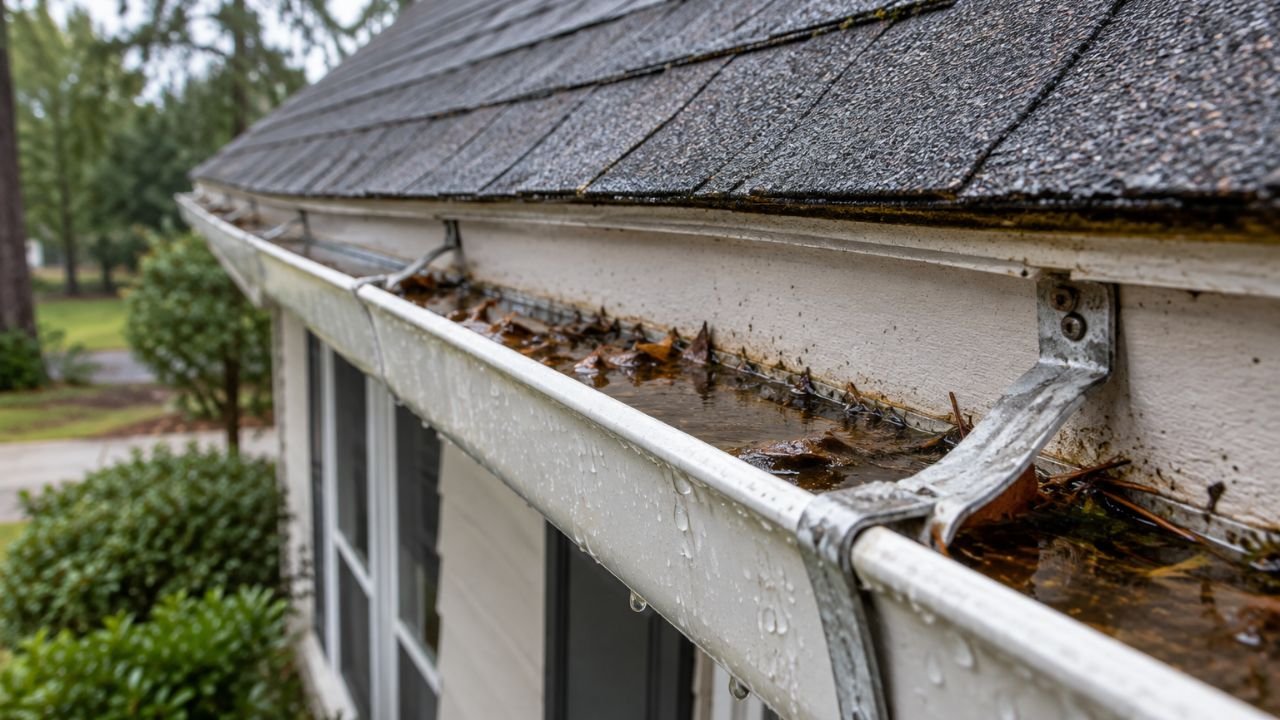
Gutter hangers need attention when your gutters sag, pull away from the house, or hold water after rain. One loose hanger may only need a small repair. But when the same problem keeps coming back, there is usually more going on. You can often spot the first clues from the yard. Step back and look along the gutter line. A small dip, an odd gap, or one section sitting lower than the rest is worth checking.
This matters even more when a strong Atlanta storm rolls through. Heavy rain puts the whole drainage system to work at once. So, how do you know whether you need a new hanger, a repair, or more work? Start with what you can actually see.
What Are Gutter Hangers?
Gutter hangers are the parts that hold your gutters in place along the roofline. They keep each run supported while water moves toward the downspouts. There are a few types you may come across. Older homes may have spikes and ferrules, with the spike visible across the front of the gutter. Many newer K-style systems use hidden gutter hangers that sit inside the gutter instead. Berger describes screw-in hidden hangers as an easy-to-maintain option that stays out of sight from ground level.
Here is a quick way to tell them apart:
| Type | What You May Notice | Where You May See It |
|---|---|---|
| Hidden hanger | Hardware sits inside the gutter | Modern K-style gutters |
| Spike and ferrule | Large spike head on gutter face | Many older systems |
| Fascia bracket | Bracket supports the gutter | Several gutter styles |
| Strap hanger | Strap runs back toward the roof | Homes where fascia mounting is not suitable |
You do not need to know the name of every part before calling someone. What matters more is noticing when that support is no longer doing its job.
How Far Apart Should Gutter Hangers Be?
For many homes, gutter hanger spacing of about 24 inches is a common starting point. But the right spacing can change based on the gutter size, material, roofline, and the type of hanger being used.
Spacing matters because each hanger helps support the weight of the gutter and the water moving through it. If the gaps are too wide, you may start to see dips between support points. Those low spots can hold water and put more strain on the gutter over time.
For an Atlanta home, the full setup matters more than one spacing number. The gutter should stay firmly supported and drain toward the downspout without sagging. And if the fascia is weak or the gutter has lost its pitch, adding more hangers alone will not solve the real problem.
1. Your Gutters Are Starting to Sag
Walk a few yards away from the house and look along the gutter from one end. A problem often starts as one small dip. You may barely notice it until you compare that spot with the rest of the run. Now look again after rain. If water stays in that dip while the rest of the gutter drains, the section may have lost support. A missing or loose hanger is one possible cause.
Watch for a few simple signs:
one section sitting lower than the rest
water collecting in the same spot
a bend between two supports
overflow near the low section
Do not rush to add another screw. First find out why the gutter dropped. The hanger may be loose, but the fascia behind it could also be weak.
2. The Gutter Is Pulling Away From the House
A gutter should sit firmly along the fascia. If daylight starts showing between the gutter and the board behind it, take a closer look. Sometimes a fastener has simply loosened. On an older system, you may even see a spike sticking farther out than the others. But a growing gap can also point to damaged wood behind the gutter.
Try looking at the problem from the side rather than straight ahead. You may notice that only one short section has moved while the rest still sits tight. This is an important repair decision. A new hanger needs solid material to hold onto. If the fascia is too thin to hold the fasteners well, the hangers may need to reach the rafter ends behind it. This gives the gutter a stronger, more secure hold. If several spots are pulling away, it is time to look beyond one loose fastener.
3. The Hangers Are Too Far Apart or Missing
You do not need to climb a ladder to start this check. From a safe spot, look for long areas where the gutter seems to dip between support points. Missing hardware is easier to spot once you know what you are looking for. With hidden gutter hangers, the supports sit inside the gutter, so a proper inspection may be needed to see exactly what is going on.
Spacing matters because each hanger helps carry the load between support points. If those points are too far apart for the system, the gutter has more room to flex. Still, do not assume that squeezing in extra hangers will cure every sag. The gutter may have lost its pitch. The fascia may be weak. Or the gutter itself may already be bent. That is why a good repair starts with the cause, not a box of new hardware.
4. Water Stays in the Gutter After Rain
Wait until the rain stops, then take another look from the ground. Does one clean section still seem to be holding water? Start with an easy explanation. Leaves, pine needles, and other debris can block water on its way to the downspout. If the gutter is clear and the same pool keeps coming back, the problem may be the slope or a sagging section.
Gutters need a slight pitch to drain. Berger recommends a minimum slope of 1/4 inch for every 10 feet of gutter. This is where one problem can lead to another. A low spot holds water. That water adds weight. The added weight puts more strain on weak supports. Fixing the reason for the low spot is better than simply dumping the water out and waiting for the next storm.
5. The Same Gutter Hangers Keep Coming Loose
You tighten a hanger, and it works for a while. Then you notice the same section pulling away again. At that point, another quick fix is probably not the best use of your time.
A fastener that repeatedly loosens may not have good material left to grip. The fascia could be damaged, or the original fastening point may have worn out. Several loose hangers can also point to a larger installation problem.
Take a look at everything happening around that spot. Is the gutter still straight? Does water drain well? Is there a stain or soft-looking area on the fascia? Are nearby hangers starting to move too? One failed support is one thing. A row of them is telling you to inspect the whole run.
What Atlanta Weather Means for Your Gutter Hangers

Atlanta gutters do not have to deal with the long-term snow loads seen in colder parts of the country. Heavy rain and debris are more useful things to think about here. A summer downpour can move a lot of water off a roof very quickly. Add wet leaves or other debris and the gutter has more to carry. If there is already a weak hanger or low spot, that is often when you notice the overflow.
Trees can change the maintenance schedule too. A house with branches close to the roof may collect debris much faster than a home in a more open lot. After a strong storm, walk around the house. You do not need a ladder. Look for fresh dips, overflow marks, sections pulling away, and water where it should not be.
Hidden Gutter Hangers vs. Older Spikes
Hidden gutter hangers sit inside the gutter, so you usually cannot see them from the yard. On a K-style gutter, the hanger supports the gutter from inside and is fastened back toward the fascia.
Older spike-and-ferrule systems look quite different. You can usually see the heads of the long spikes across the front of the gutter. Over time, those spikes may work loose. That does not mean every older gutter needs to come down. If the gutter, fascia, and drainage are still in good shape, the right repair may be enough.
The key is not whether the hardware looks old. It is whether the system is still firmly supported and draining as it should.
Should You Repair, Re-Hang, or Replace the Gutters?
This is the question that matters once you find a problem. You see a sag and wonder if it needs one small repair or a much bigger fix.
Do not judge it by age alone. Look at how much of the system is affected.
| What You See | What to Check Next |
|---|---|
| One loose hanger | Fastener and fascia condition |
| Small sag between supports | Hanger spacing and gutter pitch |
| Several loose hangers | Full gutter run and fascia |
| Water in a clean gutter | Pitch, sag, and downspout flow |
| Soft or damaged fascia | Wood repair before re-hanging |
| Bent or badly damaged gutter | Section repair or replacement |
A sound gutter with one failed support may only need a targeted repair. Several bad sections, damaged fascia, or ongoing drainage trouble call for a closer inspection. That distinction can save you from paying for work you do not need. It also keeps you from repeating the same small repair every few months.
When to Call for Gutter Service in Atlanta
Some warning signs are easy to see. Finding the real cause is harder, especially when the hanger sits inside the gutter, or the problem involves the fascia behind it.
If your gutters keep sagging, pulling away, or holding water, National Gutter Alliance can inspect the system and help determine what needs attention. A professional check can look at the hangers, gutter pitch, fascia, downspouts, and the condition of the gutter itself. That may lead to a small repair. In other cases, a damaged or worn system may need professional gutter replacement.
The useful part is knowing which one you actually need before more rain arrives. Most hanger problems give you a warning before a gutter comes badly loose. A dip after rain, a growing gap, or the same screw working free again is worth noticing. Catch that small change early, and the fix may be far simpler than waiting for the next Atlanta downpour.
FAQs About Gutter Hangers
How far apart should gutter hangers be?
Around 24 inches is common for many residential aluminum systems, but the correct spacing depends on the gutter and hanger. Some manufacturer guidance permits wider spacing. Always follow the specifications for the system being installed.
Can you replace gutter hangers without replacing the gutter?
Yes, in some cases. If the gutter is still straight and in good condition, a damaged or loose hanger may be replaced. The fascia and fastening point should be checked first.
Why do my gutter hangers keep coming loose?
The fastener may have lost its grip, or the wood behind the gutter may be damaged. Poor support or movement in the gutter can also play a part. Repeated loosening deserves a closer inspection.
Are hidden gutter hangers better than spikes?
Hidden hangers are widely used on modern K-style systems and keep the hardware out of sight. Screw-in versions are also designed to resist loosening. The best hanger still depends on the gutter and the way the home is built.
Can loose gutter hangers cause gutters to sag?
Yes. When a support loosens or fails, the gutter can dip between secure points. Water may then collect in the low area and add even more weight.
