

5 Best Gutters for Heavy Rain: Smart Choices for North Georgia
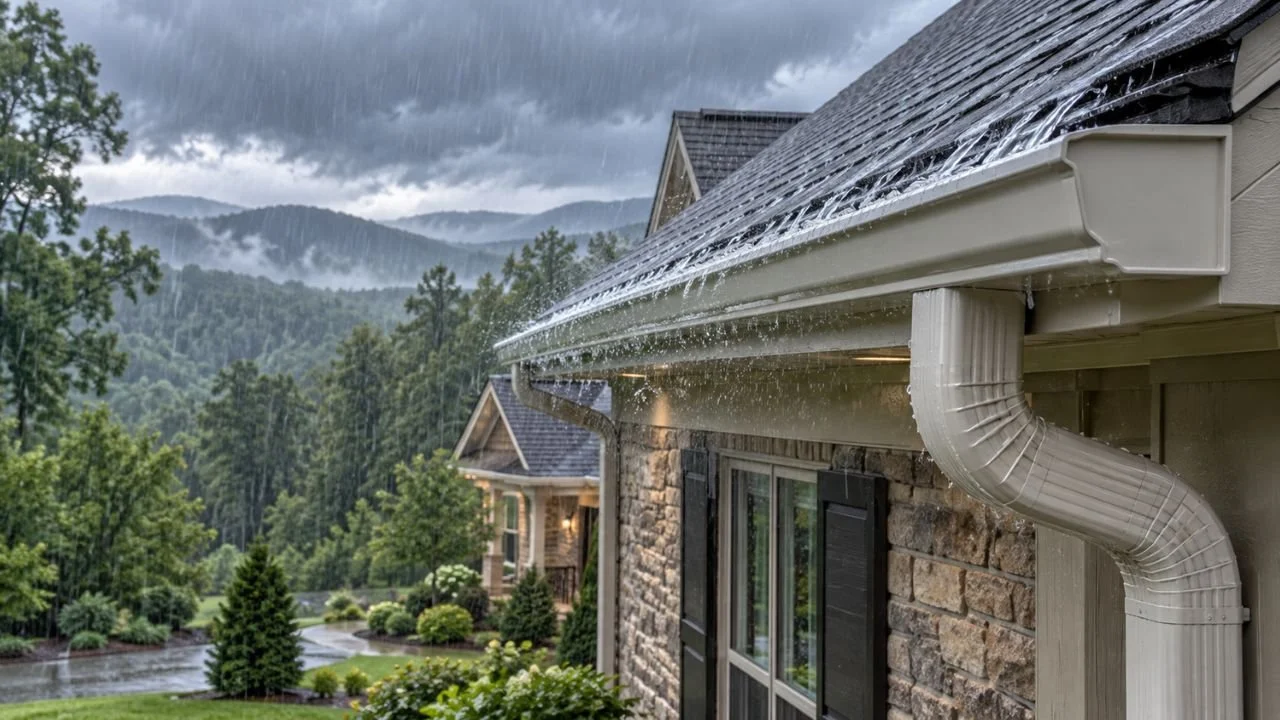
The best gutters for heavy rain in North Georgia are often 6-inch seamless K-style gutters with larger downspouts. Aluminum is a popular choice because it is strong, rust-resistant, and easy to maintain.
But gutter size is only part of the answer. Roof pitch, valleys, downspouts, and drainage all affect how well the system handles heavy rain. A good setup should move water quickly, especially during strong North Georgia storms.
Quick Comparison of the Best Gutters for Heavy Rain
Not every gutter handles North Georgia storms the same way. This quick table shows which options fit different roof types, water loads, and homeowner priorities.
| Gutter Type | Best For | Main Benefit | Key Consideration |
|---|---|---|---|
| 6-inch seamless aluminum K-style | Most North Georgia homes | Strong flow capacity with low upkeep | Needs well-sized downspouts |
| 6-inch steel K-style | Homes where strength matters | Rigid and durable | Coating must stay protected |
| Oversized K-style gutters | Large or complex roofs | Handles concentrated runoff | Not needed for every home |
| Box gutters | Very high water volume | Large drainage capacity | Requires careful design |
| 6-inch half-round gutters | Historic and premium homes | Good drainage with classic looks | Usually holds less than K-style |
1. 6-Inch Seamless Aluminum K-Style Gutters: Best Overall
A 6-inch seamless aluminum K-style system suits many homes that deal with hard rain. The larger trough provides more room for runoff than a standard 5-inch gutter, while aluminum stays light and does not rust like untreated steel.
Seamless construction also means fewer joints along long roof runs. That matters because joints are common places for old gutter systems to drip or weaken over time.
This setup makes the most sense when your home has:
A steep or fairly large roof
Long sections of gutter
Several roof valleys
Heavy rain that causes current gutters to spill over
Large trees near the roofline
But do not stop at the gutter itself.
A 6-inch trough feeding a small or clogged downspout can still fill like a bathtub with the drain half blocked. For a heavy-rain system, the outlet and downspout need enough capacity to move water away just as fast as the roof sends it down.
That is the detail homeowners often miss.
2. 6-Inch Steel K-Style Gutters: Best When Strength Matters
Steel gutters are worth considering when you care about strength as much as water capacity. They feel more rigid than aluminum and can work well on homes where branches, rough weather, or other impacts are a concern. In a 6-inch K-style profile, you also get the added room needed for strong storm runoff.
Still, steel is not automatically better for gutters for heavy rainfall. The metal does not decide how fast water leaves the roof. Roof size, gutter slope, downspout placement, and outlet size do.
Steel also comes with a trade-off. If its protective coating gets damaged, corrosion may become a concern. That makes installation quality important around cuts, fasteners, corners, and joints. If your main goal is simply better storm drainage, aluminum is often the simpler choice. If you want added rigidity too, steel deserves a closer look.
3. Oversized K-Style Gutters: Best for Large or Complex Roofs
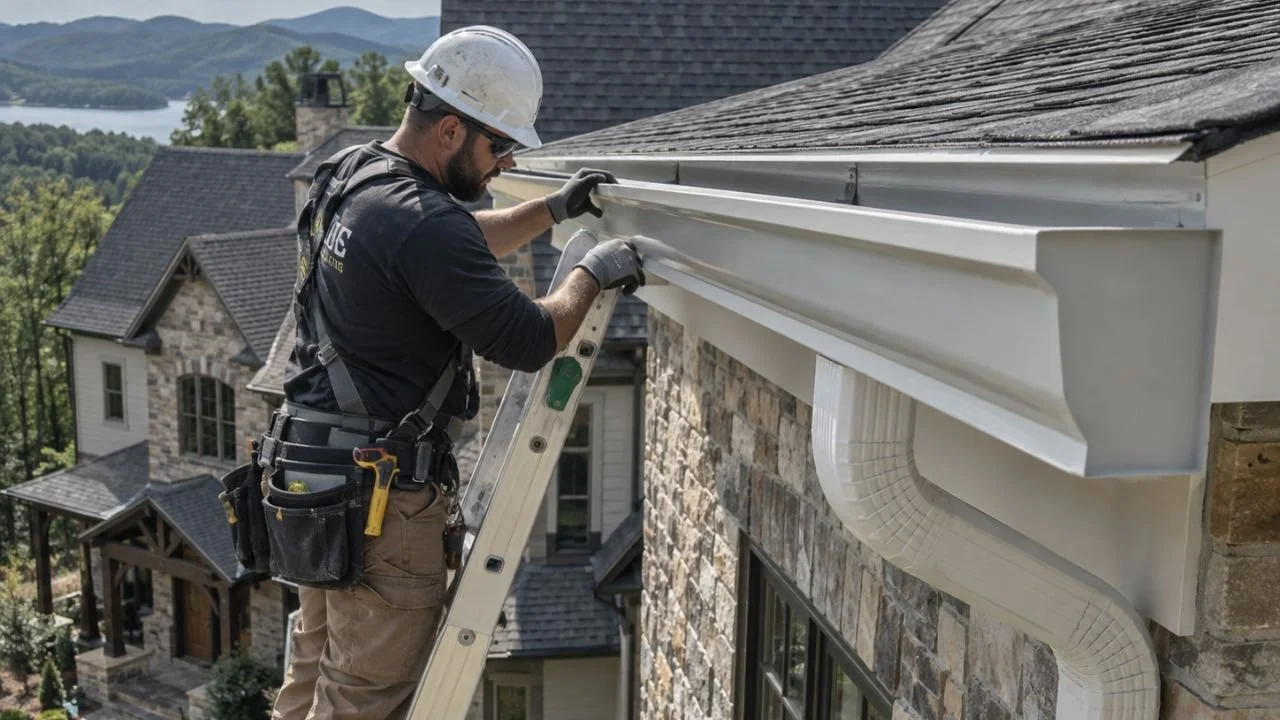
Some homes ask too much of a standard gutter. Picture a large two-story home with several steep roof planes feeding one rear corner. During light rain, everything may look fine. Then a summer storm arrives and water shoots over the gutter right below a valley. That is when an oversized system may make sense.
Seven-inch or other high-capacity K-style gutters can be useful when you have unusually large drainage areas or concentrated runoff. They are not something every North Georgia home needs. Before paying for larger gutters, ask one simple question: Why is the current system overflowing?
You may have enough gutter capacity but too few downspouts. The gutter may have sagged. A downspout could be partly blocked. Or one roof valley may simply dump too much water into one short section. Going bigger without finding the cause can leave you with a more expensive version of the same problem.
4. Box Gutters: Best for Very High Water Volume
Box gutters offer a large internal area and can handle significant runoff when designed well. You tend to see them on larger homes, custom properties, and some commercial buildings rather than a typical small house.
They make sense when water capacity is the main concern. But box gutters need careful planning. Their size, slope, outlets, supports, and discharge points have to work together. This is not the system to choose because “bigger must be safer.”
A good installer should first work out how much roof drains into each section. They should also look at where the water goes after reaching the ground. There is little benefit in moving more water through the gutter if the downspout dumps it beside your foundation.
5. 6-Inch Half-Round Gutters: Best When Appearance Matters Too
Half-round gutters have a simple curved shape that looks right at home on historic, traditional, and custom houses. They can also perform well in rain when sized correctly.
The difference is capacity. A half-round gutter usually holds less water than a similar-width K-style gutter. So if your home sees strong runoff, going too small may leave you watching water roll over the edge during the first hard storm. That does not mean you have to give up the look.
A larger half-round system with properly sized downspouts can work well. Aluminum gives you a practical option, while copper is more of a premium architectural choice. If appearance is your first concern, half-round deserves a look. If maximum storm capacity is the goal, K-style is usually easier to justify.
5-Inch vs. 6-Inch: Do You Really Need Bigger Gutters?
You see a neighbor installing 6-inch gutters and start wondering if your 5-inch system is suddenly too small. Not necessarily. A well-designed 5-inch system can work perfectly well on a modest roof. The trouble starts when a lot of water is being pushed into a small number of outlets.
A 6-inch system becomes more worth considering when:
Your clean gutters still overflow in heavy rain
Your roof has steep sections
Several slopes feed the same gutter run
Large valleys send water to one point
Long gutter runs depend on very few downspouts
You are replacing an older system that already struggles in storms
If your gutters only overflow because they are packed with leaves, changing their size does not fix the real issue. That is why an inspection should come before the sales pitch.
At National Gutter Alliance, our installers assess factors such as the roof profile, gutter setup, and local conditions rather than treating every home the same. Such type of site-specific check should be part of the installation process.
Your Gutters Overflow. What Does the Location Tell You?
The place where water escapes can give you a useful clue. You do not need to climb a ladder to spot it. In fact, the next hard rain may tell you more from the ground than ten minutes staring at dry gutters. Watch what happens.
Water spills near one downspout: The outlet or downspout may be clogged or too small for the amount of water reaching it.
Water pours over below a roof valley: That one spot may be receiving far more runoff than the rest of the gutter.
The middle of a long run overflows: Poor pitch, sagging, or inadequate drainage points may be slowing the flow.
Water spills along most of the gutter: If the system is clean, it may simply be undersized for the roof.
Water leaves the downspout but pools by the house: The gutter may be doing its job. The problem is now where the water is discharged.
These clues do not replace an inspection. They do help you ask better questions when a contractor arrives.
What About Gutter Guards in North Georgia?
Tree cover changes the conversation. A gutter can be large enough for a storm and still fail once leaves, pine needles, seed pods, and roof grit slow the water down. That is why gutter guards can make sense on wooded North Georgia properties.
But gutter guards are not magic. They should keep debris from building up while allowing water to enter the gutter quickly. The guard also needs to suit the roof pitch and gutter profile. Even a guarded system should still be checked from time to time.
If debris is your main issue, our team at National Gutter Alliance can assess the gutter setup and recommend the right service for the property.
What Should an Installer Check Before Recommending a System?
Before choosing the best gutters for heavy rain, make sure the installer checks the full drainage setup, not just gutter size.
Roof size and pitch
Valleys and high-flow areas
Downspout size and placement
Gutter slope and condition
Where water drains around the home
The right gutters for heavy rainfall should match how water actually moves across your roof. When that system is sized and installed well, your North Georgia home is far better prepared for the next hard downpour.
