

5 Best Gutter Guards for Oak Trees: What Actually Works
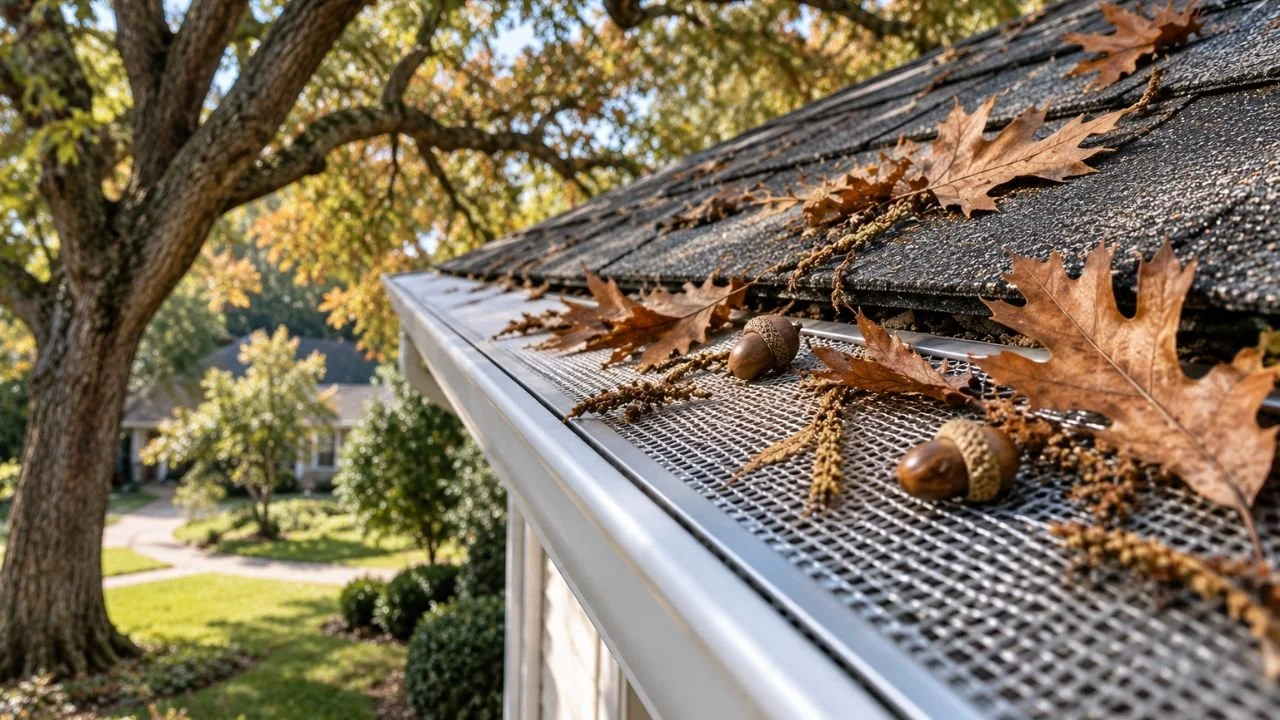
The best gutter guards for oak trees are usually stainless steel micro-mesh guards because they handle large leaves, small catkins, acorn pieces, and roof grit better than basic screens. Still, the right choice depends on what actually lands on your roof. A yard with one oak is very different from a North Georgia home tucked under a mature canopy.
Oak trees create more than one cleanup season. Spring brings stringy catkins and pollen. Later come twigs, acorns, and leaves that can pile up fast after rain or wind. That mix is why a guard that looks fine in October may struggle badly in April.
Why Oak Trees Give Gutter Guards a Hard Time
Oak leaves get most of the blame, but they are not always the hardest debris to manage. Wet leaves can stack across a guard, while thin catkins may settle into larger screen openings. Add roof grit and pollen, and you can get a layer that feels almost like damp mulch.
North Georgia homes can face a heavy oak load. The University of Georgia notes that white oak is probably the most common oak in North Georgia, and mature trees can spread 40 to 60 feet wide. One large tree close to your roof can affect several gutter runs at once.
So the real question is not, “Does this stop leaves?” It is, “What happens when leaves, catkins, acorns, and a hard rain show up together?”
Quick Comparison of the Best Gutter Guards for Oak Trees
You do not need the most expensive guard on every house. You need one that matches the debris, roof pitch, gutter size, and amount of tree cover around your home. Here is the practical difference between the five main options.
| Gutter Guard | Oak Leaves | Catkins | Acorns | Fine Debris | Upkeep |
|---|---|---|---|---|---|
| Stainless steel micro-mesh | Excellent | Excellent | Excellent | Excellent | Low |
| Perforated aluminum | Excellent | Fair | Excellent | Fair | Low to moderate |
| Reverse-curve | Very good | Fair | Very good | Fair | Moderate |
| Standard metal mesh | Good | Fair | Good | Poor | Moderate |
| Aluminum micro-mesh | Excellent | Excellent | Excellent | Very good | Low |
If your roof gets oak debris plus pine needles, seeds, or shingle grit, the smaller openings of micro mesh gutter guards become much more useful. If broad leaves are your only real problem, a less complex metal system may do the job.
1. Stainless Steel Micro-Mesh: Best Overall
Stainless steel micro-mesh is our strongest all-around pick for oak-heavy properties. The fine screen keeps large leaves out, but that is the easy part. Its real advantage is stopping smaller debris such as catkins and seed pieces that can slip through ordinary screens.
Oak-focused installers also point to catkins as one of the hardest types of debris for gutter protection. The long, stringy pieces can catch on openings, bunch together, and form a mat when wet.
There is one catch. Fine mesh can still collect pollen and debris on its surface. You may need to brush or rinse parts of the guard from time to time, especially beneath a dense canopy.
That makes this a low-maintenance choice, not a no-maintenance one.
2. Perforated Aluminum: Best for Large Oak Debris
Perforated aluminum guards use small holes punched into a solid metal panel. They handle broad leaves, twigs, and acorns well. Their rigid design also means they do not sag as easily as thin plastic screens.
The tradeoff is the opening size. Tiny catkin pieces, seeds, and roof grit may still work through some perforated guards. If you have mature oaks right above the roof, this difference becomes more noticeable.
Think about your spring cleanup. If the driveway turns yellow-green with pollen and oak tassels each year, finer filtration may be worth paying for.
3. Reverse-Curve Guards: Good for Heavy Leaf Fall
Reverse-curve guards work differently. Rain follows the curved surface into the gutter while leaves are meant to fall past the edge. That can work well when your biggest headache is a thick layer of fall leaves.
But water flow matters a lot with this design. A steep roof or busy roof valley can send water toward the gutter with real force. If the guard angle is wrong, some water may shoot over the edge instead of entering the gutter.
Catkins can also gather near the narrow intake area. So this system needs a good match between the roof, gutter, and guard instead of a quick one-size-fits-all installation.
4. Standard Metal Mesh: Best for a Simple Leaf Problem
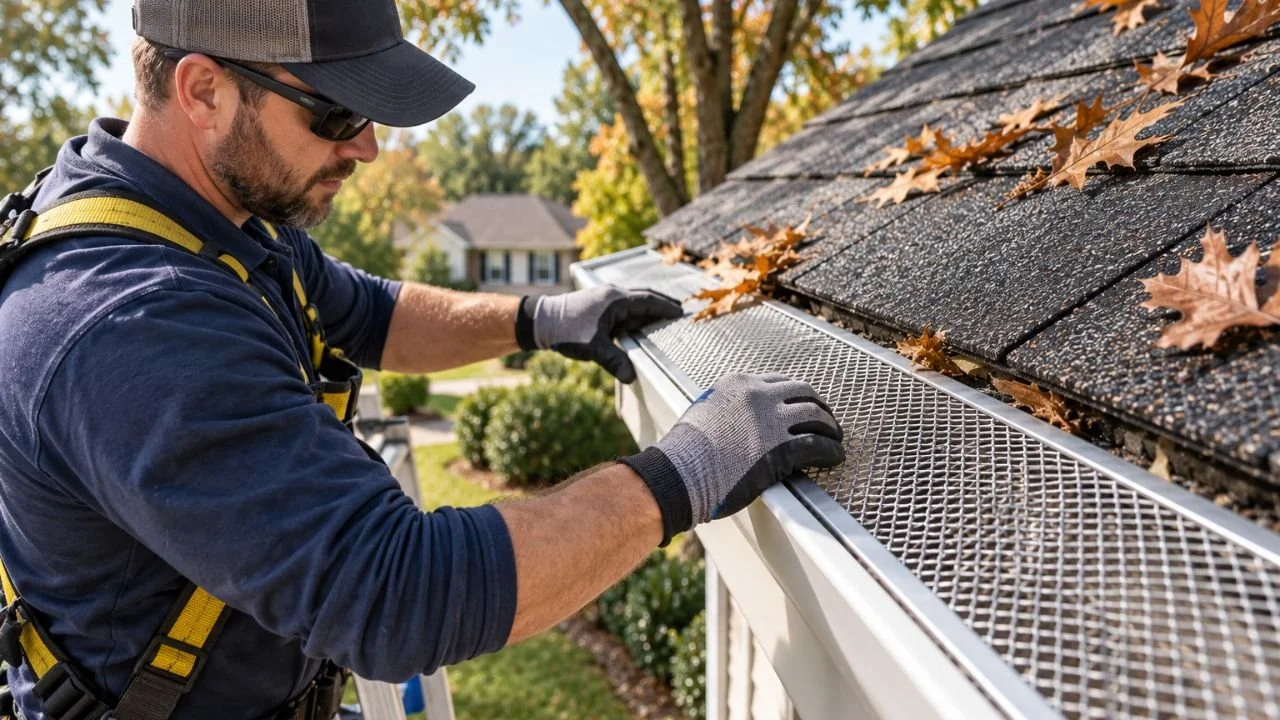
Standard metal mesh is easy to understand. The holes keep large leaves and twigs out while rain falls through. It can be a sensible choice when your home has lighter tree coverage and large debris is the main issue.
The problem starts with small material. Oak catkins, roof grit, small seeds, and pine needles can work through wider openings. You may end up with clean-looking guards and dirty gutters beneath them.
That does not make standard mesh bad. It simply means it is better suited to a simple leaf problem than a roof sitting under several mature trees.
5. Aluminum Micro-Mesh: A Lighter Fine-Filter Option
Aluminum micro-mesh gives you fine filtration with a lighter metal construction. Good designs can handle oak leaves and catkins while resisting rust. For many homes, it sits nicely between basic screens and heavier premium systems.
But the word “micro-mesh” alone does not tell you much. Look at the frame, the way the mesh is supported, and how the guard attaches to your gutter. A fine screen stretched across a weak frame can still bow under wet oak leaves.
This is one reason professional assessment matters. Product type is only half of the job.
Can Oak Catkins Clog Micro Mesh Gutter Guards?
They can collect on top of the screen, even when they cannot enter the gutter. That difference matters. The gutter may remain clear while a layer of wet pollen and catkins slows water at the surface.
This is one of the few downsides that deserves more attention when discussing micro mesh gutter guards. After the spring drop, look at the sections directly below your largest trees. If debris has formed a mat, a light surface cleaning may be needed.
If someone tells you that any gutter guard will mean you never look at your gutters again, be cautious. Guards greatly reduce cleaning but still need occasional inspection.
What Should You Check Before Choosing a Gutter Guard?
The best gutter guards for oak trees depend as much on the house as the trees. At National Gutter Alliance, our installers look at roof pitch, gutter profile, local climate, and surrounding tree coverage before recommending a system. That is a better approach than choosing from a photo online.
Before you buy, check:
Tree coverage: How many branches actually hang over the roof?
Debris type: Do you get leaves only, or catkins, pine needles, and grit too?
Roof valleys: Do several roof sections dump water into one short gutter run?
Existing gutters: Are they already sagging, leaking, or holding standing water?
Downspouts: Can they move water freely before guards are added?
Access: Can the guards be opened or removed if future service is needed?
That last point gets overlooked. Gutters and roofs will need work someday. A system should protect the home without making normal repairs a headache.
Are Gutter Guards Worth It for Oak Trees?
Yes, especially if mature oaks fill your gutters with leaves, catkins, and acorns each year. The best gutter guards for oak trees can reduce clogs, protect downspouts, and cut down on frequent gutter cleaning.
If your home has little tree cover, regular cleaning may be enough. For heavily wooded properties, professional installation makes more sense because roof pitch, gutter size, and debris type all affect performance.
