

5 Best Downspout Extension Ideas to Prevent Costly Damage
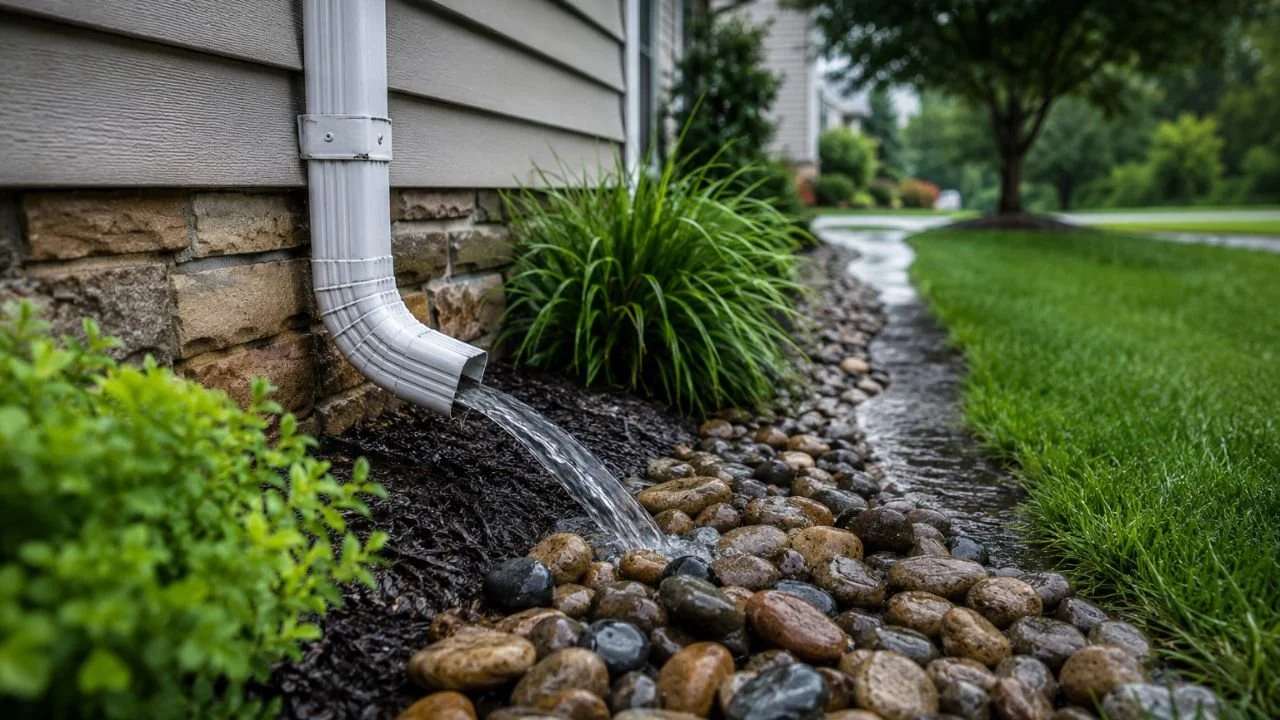
The best downspout extension ideas move rainwater away from your home. That simple step can help protect your foundation, soil, siding, and yard.
This matters a lot in Georgia. Heavy rain can drop a large amount of water in a short time. If that water lands beside your house, trouble can follow. You may see muddy soil first. Then comes erosion, standing water, or damp areas near the foundation. In some cases, water can even find its way into a crawl space or basement.
So, where should your downspout send the water? That depends on your yard, slope, soil, and drainage needs. The right fix should solve the water problem, not just move it a few feet.
Why Downspout Extensions Matter in Georgia
A gutter system has one main job. It collects roof water and moves it away from the house. The downspout handles the next part. It takes that water to the ground. But the job does not end there.
The water still needs a safe place to go. If it falls beside the foundation, the soil can become soaked. Heavy runoff can also wash away soil around the downspout. Over time, that can create low spots and messy puddles. Georgia's heavy summer storms make this worse. A small drainage issue may look harmless on a dry day. After a hard storm, it can become very clear.
That is why the extension matters.
1. Install a Longer Ground-Level Extension
A ground-level extension is often the easiest fix. It connects to the bottom of your downspout. Then it carries water farther into the yard. This works well when there is open space around the home. It also helps when the yard slopes away from the foundation.
But there is one thing to check first. Where will the water end up?
A longer pipe is not useful if it ends in another low spot. You may simply move the puddle farther into the yard. Try to send the water toward an area that drains well. Keep the outlet away from the foundation. Also make sure the extension stays in place during heavy rain. A loose extension can shift fast. Lawn mowers can also knock it out of place.
2. Add a Splash Block
A splash block is small. But it can still do a useful job. It sits under the end of the downspout. Water hits the block and spreads out over a wider area. This helps reduce the force of the water. That can limit soil erosion around the outlet.
Splash blocks work best when the downspout already ends far enough from the house. They are not a fix for every drainage problem.
For example, a splash block will not solve a yard that slopes toward the foundation. It also will not fix a clogged gutter. Think of it as a simple water control tool. It works best when the rest of the drainage setup is already sound.
3. Turn the Downspout Into Part of the Landscape
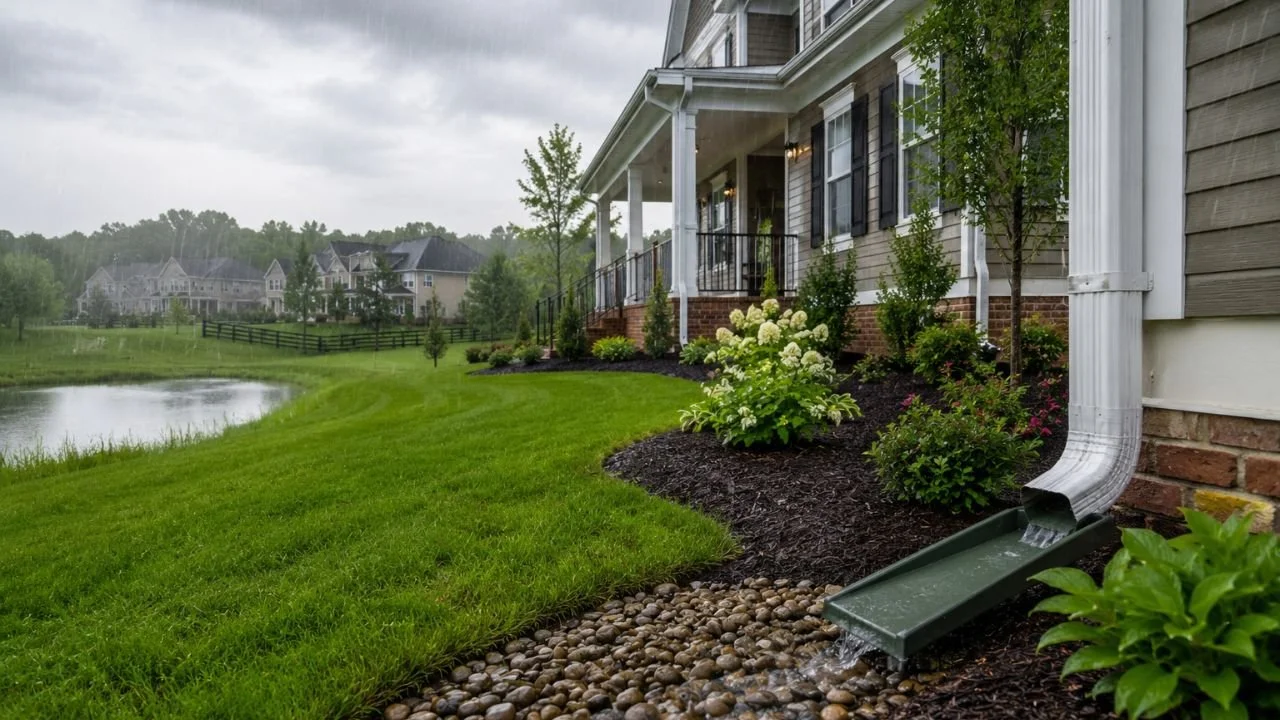
Good drainage does not have to look ugly. Some of the best downspout landscaping ideas blend water control with the yard. A downspout can direct water toward a planted area, gravel bed, or rain garden. This can make a plain drainage setup look much better.
A rain garden can be useful in the right spot. It gives rainwater a place to collect and soak into the soil. But location matters.
Do not place one right beside the house. The area should be far enough from the foundation. It also needs soil that can drain well. Plants can help slow water down. They can also reduce soil loss.
Still, more plants do not always mean better drainage. A poorly placed garden can hold too much water near the home.
The goal is simple. Make the water path useful, safe, and easy to manage.
4. Use an Underground Drain
Some yards do not have much room for long extensions. Maybe a walkway sits nearby. Maybe the driveway is in the way. Or perhaps you simply do not want a long pipe across the lawn.
An underground drain can solve that problem. The downspout connects to a buried pipe. The pipe then carries water to a safe outlet. This gives the yard a cleaner look. It also keeps the drainage path out of the way. But underground drainage needs proper planning.
The pipe needs the right slope. The outlet needs a safe location. The system also needs to handle the amount of water coming from the roof. This is where DIY work can go wrong.
A pipe may look fine after installation. Then a heavy storm hits. Water backs up because the pipe does not drain well. If water keeps backing up, the issue may not be the downspout. A professional can check the full system and find the real cause.
5. Consider a Larger Drainage System
Some homes have a bigger problem. The yard may slope toward the house. Several downspouts may dump water into the same area. Or the soil may drain very slowly. In these cases, a simple extension may not be enough. A larger drainage plan may work better.
Depending on the property, options may include:
Buried drain pipes
A drywell
A rain garden
A drainage channel
A larger discharge area
The right choice depends on the yard. Roof size matters too. So does soil type and slope.
This is why copying a neighbor's setup is not always wise. Their yard may handle water very differently. The goal is not to find the most expensive option. It is to find the option that actually works.
Do You Need a Gutter Repair?
Sometimes the downspout gets blamed for a gutter problem. That is an easy mistake to make. Your gutter may be leaking. It may also sag or pull away from the house. A clog could be slowing the flow of water.
Take a close look during the next rain. Do you see water pouring over the gutter? Is water leaking from a joint? Does the downspout drain slowly? These signs may point to a bigger issue.
National Gutter Alliance provides professional gutter repair for homes that need more than a simple extension. Fixing the gutter first may make a big difference. Otherwise, you could spend money on drainage while the real problem remains above your head.
When Is New Gutter Installation Better?
Old gutters do not always need to be repaired. Sometimes replacement makes more sense. This may be true when gutters have major damage. It can also make sense when the current system does not handle your roof's water well.
A new system can give the home a fresh start. It can also help create a better path for rainwater. National Gutter Alliance offers gutter installation for homeowners who need a new system. Our team also offers gutter cleaning, repairs, gutter guards, and seamless gutters.
How to Pick the Right Downspout Extension
There is no single fix for every Georgia home. Before choosing one, look at the whole yard.
Ask these simple questions:
Where does water collect after heavy rain?
Does the yard slope away from the house?
Is there room for a long extension?
Would an underground drain look and work better?
Is the gutter itself damaged?
Does the soil drain well?
Where will the water go after it leaves the pipe?
These questions can save you from a bad fix. A longer extension may be enough. A splash block may do the job. A rain garden may work well for a larger yard.
But sometimes the problem needs a professional eye.
At the National Gutter Alliance, we offer gutter services across Georgia. The team can inspect the system and help find the right solution for the home. The best drainage setup is not the one with the most parts. It is the one that keeps water moving away from your home when the Georgia rain starts coming down hard.
So, where is your downspout sending its water right now?
