

Are Gutter Guards Worth It? 7 Practical Benefits for Homeowners

Are gutter guards worth it? For most U.S. homes, yes. Not because they feel like an upgrade, but because gutters stop behaving like a background system once they begin clogging again and again after storms.
It usually begins small. A bit of overflow when it rains, a few leaves caught in one corner, and a quick ladder clean that feels easy enough to put off. Then a couple of months go by, and the same problem shows up again, in the same spot, with the same mess.
At some point, it stops feeling like routine maintenance. It feels like a cycle that never really ends.
That is where gutter guards start to make sense.
What Actually Goes Wrong in the Gutter System?
Gutters do not usually break. They slow down.
At first, debris slowly starts to gather. Then rain and wind push in more, little by little. Over time, it gets packed down, and the flow doesn’t move evenly anymore.
Then a heavy storm arrives, and the water can’t move through at all. It spills over the edge instead.
That overflow is where most problems begin:
Damp soil near the house
Fascia boards staying wet longer than they should
Exterior marks that slowly spread
Moisture settling in hidden corners
It does not look like failure at first. It looks like “just overflowing.” But it repeats. That repetition is the real issue.
7 Real Benefits That Decide Whether Gutter Guards are Worth It
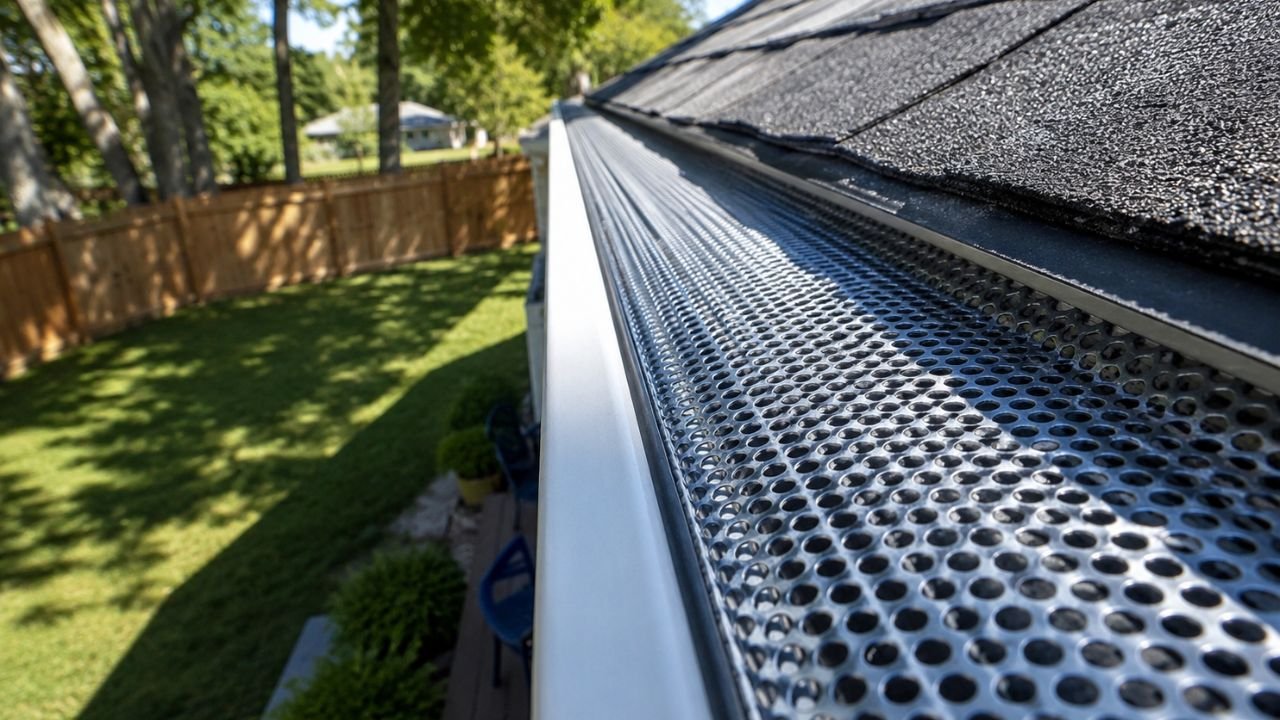
These are not theoretical advantages. They show up in everyday use, slowly but clearly over time.
1. Fewer Full Gutter Cleanings
Without gutter guards, cleaning turns into a repeating task every season, sometimes even more often. Leaves drop, gutters fill up again, and the ladder comes out once more.
With guards installed, most debris never gets the chance to settle deep inside the system. Cleaning still happens, but full, heavy cleanouts become rare.
It moves from a regular chore to something more like a quick look now and then. That small shift changes how the whole system feels to deal with.
2. Better Performance During Heavy Rain
Rain is not gentle in many parts of the U.S. It comes fast, sometimes in short bursts that overwhelm weak spots.
When gutters are clogged, water just spills over quickly.
With guards installed correctly, the flow tends to stay more stable. Water keeps moving instead of backing up at the same points.
It does not fix storms. It just reduces messy overflow moments.
3. Less Long-Term Water Stress on the Home
This change is gradual and often goes unnoticed at first. A small overflow in one area, a damp patch that appears now and then, nothing that feels urgent in the moment.
But over time, these small events add up. Moisture stays in contact with surfaces longer than it should. Wood takes longer to dry. Soil around the foundation shifts a little with each season.
Gutter guards help limit how often these situations begin, which reduces long-term exposure to repeated moisture issues.
4. Reduced Buildup from Seasonal Debris
If a home is close to trees, gutters get a lot of stuff coming in all the time.
Leaves in the fall, seeds in spring, small branches after the wind, and dust over time. Without protection, all of this builds up inside the gutter. With guards, much of it stays out or gets washed away before it can collect.
It is not about stopping everything completely. It is about stopping buildup from forming in the first place.
5. Fewer Pest-Related Issues
Clogged gutters hold moisture longer than people realize. That creates small pockets where insects or pests may gather.
Not always visible from the ground, but common enough in older or neglected systems. Keeping debris out reduces those damp zones.
6. Longer Life for the Gutter System
Debris is heavier than it looks once it gets wet. Leaves sitting for weeks start adding weight. That pressure slowly affects brackets and alignment.
Over time, gutters can sag or pull slightly away from their position. Reducing buildup helps the system stay lighter and more stable through seasons of rain and wind.
7. Maintenance Becomes Predictable
Without guards, maintenance feels reactive. Something clogs, then it gets fixed. With guards, it becomes more predictable. Not zero maintenance, just less urgent, less frequent.
That shift is subtle but important. It removes the “surprise” element from gutter care.
Types of Gutter Guards
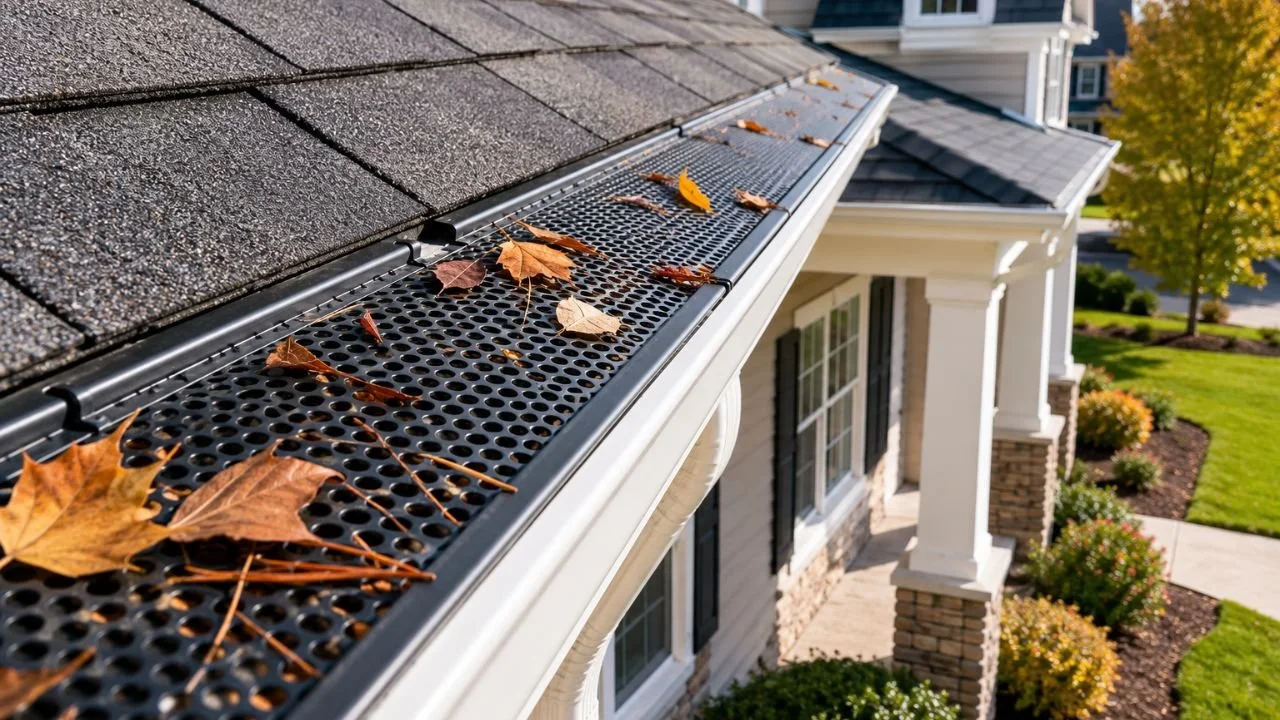
Not all systems behave the same way, and that matters more than most people expect.
Common options include:
Mesh Guards: Handle medium debris like leaves
Micro-Mesh Guards: Better for fine debris like pine needles
Screen Guards: Basic surface-level protection
Reverse Curve Systems: Guide water while shedding debris outward
Foam or Brush Inserts: Sit inside the gutter channel
Performance depends heavily on matching the type to the environment around the home.
Gutter Guard Cost Reality (What People Usually Want to Know)
Cost is often the deciding factor, even if it is not the first question asked. In the U.S., pricing varies quite a bit depending on home size, roof height, and system type.
Some homeowners go for lower-cost DIY setups. Others choose professionally installed systems for consistency and long-term reliability.
The real comparison usually ends up being simple: Ongoing cleaning costs vs upfront installation costs over time.
For many homes, the balance becomes clearer after a few seasons of repeated maintenance.
Are gutter guards easy to install?
On paper, yes, but in real homes, it depends.
Single-story homes with simple rooflines are usually more straightforward. But once roof height increases or slopes get complex, things change.
Water flow direction matters. So does the existing gutter condition. Even small mistakes can lead to:
Water spilling over instead of flowing through
Debris sitting on top instead of moving away
Uneven performance during storms
So while installation may look simple in videos or packaging, real-world performance is less forgiving.
Why Installation Quality Matters as Much as the Product?
This is something homeowners usually learn the hard way. Two identical systems can behave completely differently depending on installation quality.
One works smoothly for years. The other struggles during the first heavy rain. The difference usually comes down to slope alignment, fastening quality, and proper water flow testing after setup.
That is where trained installation matters more than brand choice.
Professional Gutter Installation Services in the U.S.
For homeowners looking for structured installation support, National Gutter Alliance operates a nationwide gutter installation network across the United States. The focus is on trained installers and consistent installation standards across projects.
We also run a structured training course in Memphis, Tennessee. It is a five-day hands-on program where installers learn gutter systems, installation techniques, and real field handling before working on customer projects.
Our partnership program connects roofing and construction professionals across different regions, helping maintain more consistent service quality across their network.
For homeowners, this matters because installation quality directly affects how gutter guards perform over time.
When Gutter Guards May Not Be Necessary
They are not a universal fix. In some homes, they may not be worth it if:
Very few trees are nearby
Gutters rarely clog
Cleaning is already minimal
Roof design naturally sheds debris well
No history of overflow issues
In those cases, the benefit exists, but the urgency does not.
Final Thoughts
Gutters usually stay out of sight when they are working well. But once clogging and overflow become a repeating pattern, they stop being a background system and turn into regular maintenance.
That is where gutter guards become less of an upgrade and more of a practical decision about reducing repetition. Not removing maintenance completely, but making it less frequent, less urgent, and more predictable over time.
